German vs American Cockroach in Texas: Simple Comparison and Treatment Cost
German cockroaches are small, tan, and breed fast indoors. American cockroaches are large, reddish-brown, and often wander in from drains or outside. Knowing which one you have decides both the treatment and the price.
Calls may be recorded for quality and matching purposes.
Who this guide is for
This guide is for Texas homeowners who see roaches in the kitchen or bathroom and want to act fast. You may already be calling around for quotes. You may not know which roach you have or what a fair price looks like.
That gap matters. The two most common house roaches in Texas are the German cockroach and the American cockroach. They look different, behave differently, and cost different amounts to control.
You are trying to decide three things:
- Which roach is in my home? The answer shapes everything else.
- Can I handle this myself, or do I need a pro?
- What is a normal price to pay?
HomePest Match is an independent guide, not a pest company. We help you understand the problem and connect you with local providers. We do not send anyone to your door or call you first. You reach out when you are ready. Some provider calls are recorded for quality, which is standard in the industry.
By the end, you will name your roach and know what to ask on your next call.
The mistake that costs Texas homeowners money
The biggest misunderstanding is simple. People treat every roach the same way. They spray a store can, kill what they see, and think the job is done. Then the roaches come back.
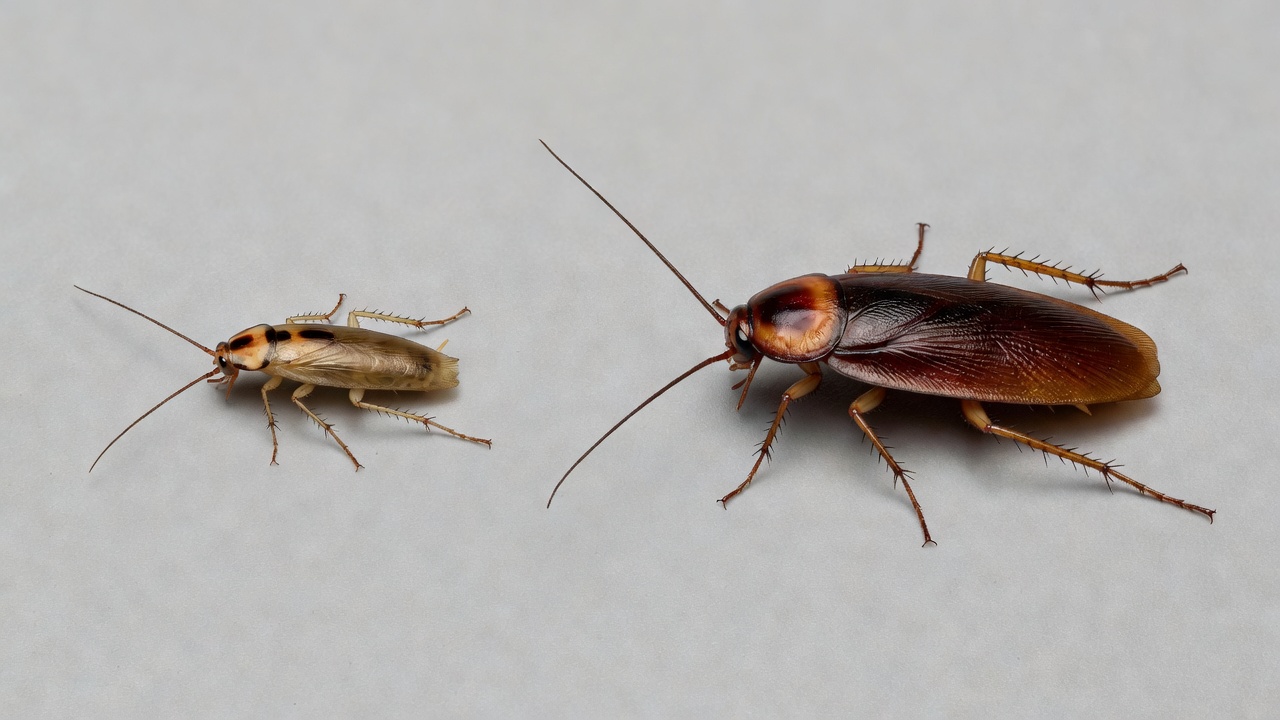
Here is why. The German cockroach and the American cockroach are almost opposites. Treating one like the other wastes money and time.
German cockroach: the indoor breeder
- Small, about half an inch long.
- Light tan with two dark stripes behind the head.
- Lives and breeds indoors, close to food and water.
- Hides in kitchen cracks, behind appliances, and in bathroom cabinets.
- Multiplies fast. One female can lead to hundreds.
American cockroach: the big wanderer
- Large, one to two inches long. Often called a "water bug" or "palmetto bug" in Texas.
- Reddish-brown with a light band behind the head.
- Usually enters from outside, sewers, or drains.
- Prefers warm, damp places like basements, garages, and pipes.
Why this matters: German roaches need baiting and follow-up because they breed inside your walls. Spraying alone can scatter them. American roaches often need drain and entry-point work, not endless kitchen bait. Getting the ID wrong means paying for the wrong plan.
Signs that tell the two roaches apart
You do not need to catch one to know which roach you have. Look at where and how they show up.
Signs of German cockroaches
- You see small tan roaches in daylight, near the toaster or coffee maker.
- They cluster in the kitchen and bathroom, not the garage.
- You find tiny brown egg cases in drawers or cabinet corners.
- You spot dark pepper-like specks near hinges and seams. That is droppings.
- A musty, oily smell in a heavy case.
Signs of American cockroaches
- Large brown roaches near drains, water heaters, or the garage.
- They appear at night and freeze when you turn on the light.
- One or two show up after rain, not dozens at once.
- You find them in floor drains or near the sewer clean-out.
Quick rule of thumb: many small roaches in the kitchen usually means German. A few big roaches near water usually means American.
According to the Texas A&M AgriLife Extension, German cockroaches are the most common indoor pest roach and rarely survive outdoors in cold weather. That is why they depend on your warm home.
What actually works, and when DIY fails
The right method depends on your roach.
For German cockroaches
Bait is the core tool. Roaches eat it, return to hiding spots, and pass the effect through the group. Store gels can help small cases. But heavy German infestations usually beat DIY, because they breed faster than you can kill them.
A pro uses gel bait, growth regulators, and careful placement in cracks. It often takes two or three visits over a few weeks to break the breeding cycle. The U.S. Environmental Protection Agency (EPA) recommends an integrated approach: seal cracks, remove food and water, and use bait before broad spraying.
For American cockroaches
Focus on entry points and moisture. Seal gaps around pipes. Cover floor drains. Fix leaks under sinks. Treat the outside perimeter and garage. Because these roaches live outdoors, ongoing exterior service keeps them out.
When to stop DIY
- You still see roaches after two weeks of effort.
- You see them during the day.
- They appear in more than one room.
- You find egg cases.
At that point, a professional plan saves money over repeat store trips. Our cockroach control guide covers treatment steps in more detail.
What to ask when you request quotes
A good call gives the provider what they need and gets you clear numbers. Have your roach type and ZIP code ready.
Pests and plan details
- "I have small roaches in the kitchen" or "large roaches near the garage." Say which.
- Does the plan target German or American roaches specifically?
- How many visits are included to break the cycle?
Coverage and property size
- Do you treat inside, outside, or both?
- Does the price cover my whole home square footage?
- Is the garage or outbuilding included?
Safety and licensing
- Are you licensed in Texas?
- What products do you use around kids and pets?
Written terms and timeline
- Is there a follow-up guarantee if roaches return?
- Is this a one-time treatment or a recurring plan?
- Can I get the price in writing before I commit?
Our guide on service plans and pricing explains how quarterly and monthly plans differ. You start the contact when you are ready.
Texas notes for cockroach control
Texas weather works in a roach's favor. Warm, humid stretches across cities like Houston, San Antonio, and Dallas keep both roach types active for much of the year.
American cockroaches thrive in coastal and Gulf areas with heavy moisture. Many Houston homeowners call them palmetto bugs. Wet summers and storm drains give them a steady path inside.
German cockroaches stay active year-round because they live indoors near heat and water. Cold snaps do not stop them once they are established in a kitchen.
A few local habits help:
- Keep sink areas dry. Both roaches need water more than food.
- Check under the dishwasher and fridge, common German hiding spots.
- Seal gaps where utility lines enter the home. American roaches use these.
- Trim mulch and plants back from the foundation.
Insurance note: standard homeowners insurance in Texas usually does not cover pest damage or removal. Insurers treat roach problems as a maintenance issue, not a sudden accident. Plan to budget for treatment yourself.
Cost factors, not fixed prices
Prices vary by home, roach type, and severity. No honest provider quotes a flat number without details. Here are the factors that move the price.
- Roach type: German cases usually cost more because they need repeat visits to break breeding.
- Severity: a few sightings cost less than a full kitchen infestation.
- Home size: more square footage means more treatment area.
- Plan type: one-time visits cost more per visit; recurring plans spread cost out.
- Follow-ups: German roach plans often bundle two or three visits.
How a plan usually breaks down
Providers often use a startup fee plus recurring visits. A quarterly plan has one larger first visit and smaller repeat visits. A monthly plan for a heavy German case costs more upfront but works faster. Ask which fits your case.
To compare structures without guessing at prices, see our cost planning guide and service plan breakdown. Then request quotes and match the numbers to your roach type and home size.
Common questions
How do I quickly tell a German roach from an American roach?
Look at size and location. German roaches are small, tan, and swarm the kitchen. American roaches are large, reddish-brown, and appear near drains or the garage.
Why are German cockroaches harder to get rid of?
They breed indoors and multiply fast. A store spray kills what you see but misses the eggs. Most cases need bait plus follow-up visits from a pro.
Can I treat American cockroaches myself?
Sometimes. Seal entry points, fix leaks, and cover drains. If they keep returning, an exterior perimeter treatment from a provider usually solves it.
Does homeowners insurance in Texas cover roach treatment?
Usually not. Insurers treat pest problems as a maintenance issue, not a covered accident. Plan to pay for treatment out of pocket.
How many visits will roach treatment take?
American roaches may clear in one or two visits. German roaches often need two or three visits over several weeks to break the breeding cycle.
What should I have ready before I call for a quote?
Your ZIP code, whether the roaches are small or large, and which rooms they appear in. That helps a provider give an accurate price.
Related: cockroach control guide · service plans and pricing · cost planning guide · request pest-control quotes