North Carolina Pest Control: A Spouse Decision Guide for Spiders and Ants
Most quote calls stall on one thing: you want to talk it over with your spouse first. This North Carolina guide gives you both the numbers, the commitment terms and the questions to settle at the kitchen table. When you agree, you initiate the call — HomePest Match never calls you.
Calls may be recorded for quality and matching purposes.
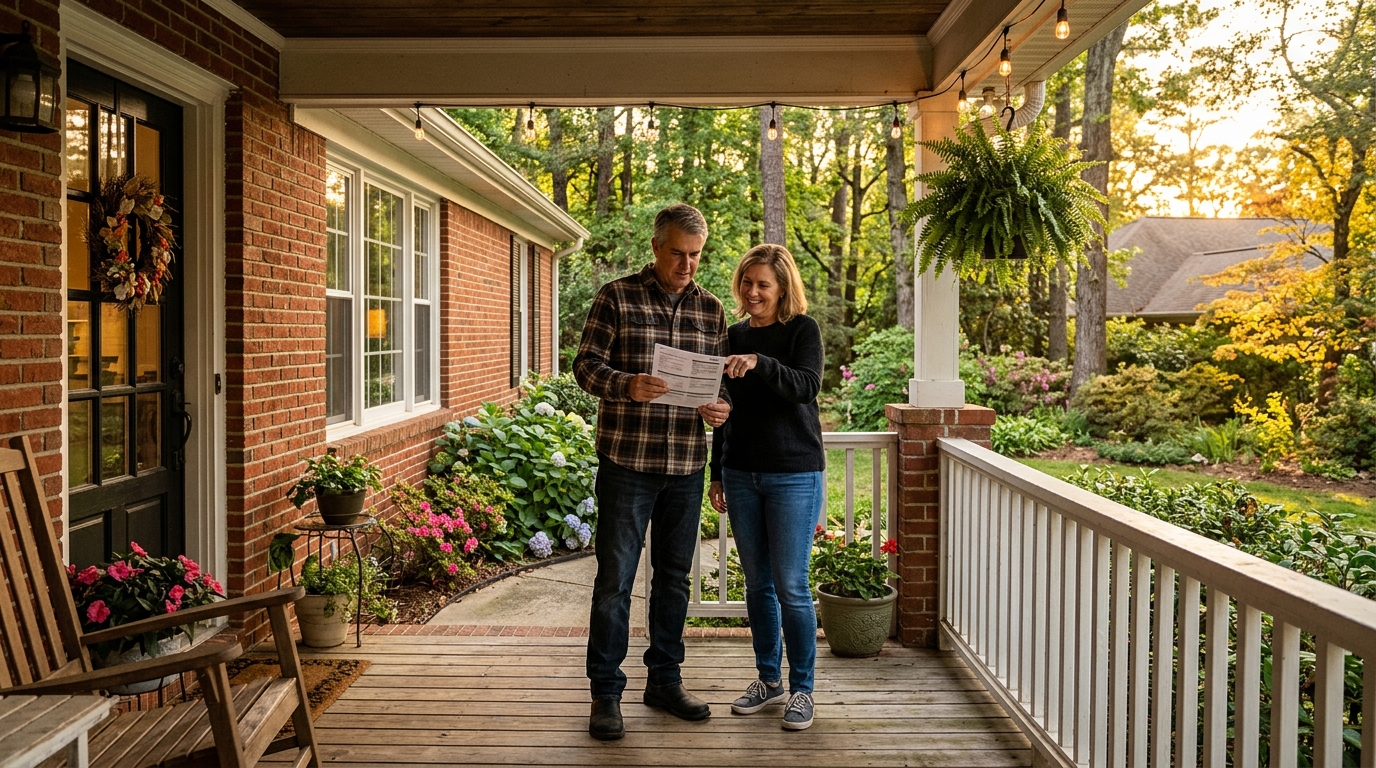
Who this guide is for and what you are deciding

You have spiders in the garage and ants marching across the patio. You called a provider, heard a price, and paused — because this is a shared household expense your partner should weigh in on. That instinct is smart. This guide is for the North Carolina homeowner who wants both people informed before committing.
HomePest Match is an independent matching and information service, not a pest-control company. We do not treat homes. We help you understand pricing, contracts and process so you can request quotes from licensed providers with confidence. You always start the contact.
The three decisions on the table
- Scope: Are you treating one problem (ants outdoors) or setting up ongoing coverage for the whole property?
- Commitment: Do you want a one-time visit, or a recurring plan with a term agreement?
- Budget rhythm: A lower per-visit price on a quarterly plan, or a higher one-time fee with no contract?
These are exactly the points couples disagree on. One partner sees a recurring plan as peace of mind. The other sees a monthly line item that renews automatically. Neither view is wrong. The goal is a shared decision you both understand before a technician ever steps on your property.
Common house spiders and pavement or Argentine ants — the two pests driving most North Carolina yard calls — rarely demand an emergency. That gives you room to compare. Use it. A day spent aligning on scope and budget usually saves money and prevents the buyer's remorse that comes from signing under pressure on a doorstep.
What couples misunderstand about pest control pricing and commitment
This is the heart of the disagreement, so we go deep here. The biggest misunderstanding is treating the sticker price as the whole cost. It is not. The real question is price times commitment — what you pay, how often, and for how long you are locked in.
One-time versus recurring: the mechanism
A one-time treatment targets the pests present today. A residual insecticide is applied to baseboards, entry points and exterior foundation. It kills on contact and keeps working for weeks as pests cross the treated surface. But residuals degrade with rain, sun and cleaning. That is why single visits often fail against ants: you kill the foragers, but the colony and queen survive underground and rebuild.
Recurring plans exist to solve that failure mode. Quarterly service — four visits a year — re-establishes the treated barrier before it wears off and interrupts the breeding cycle. Monthly plans do the same, faster, and suit heavy pressure. This is why a provider quotes a plan, not just a spray.
The contract question your spouse will ask
Many recurring plans use an annual agreement. If you cancel early, some charge an early-termination fee or claw back a discount. Read this before signing. Ask:
- Is there a minimum term, and what is the early-cancel fee?
- Does the price renew automatically, and at what rate after year one?
- Are re-treatments between visits included at no extra charge if pests return?
The second misunderstanding is assuming both partners heard the same offer. On a live call, prices move fast. Write down the per-visit price, the initial (first-visit) fee, the visit frequency and the term length. Put those four numbers in front of your spouse. Agreement gets easy once the abstract "how much is it?" becomes four concrete lines on paper.
Signs you are dealing with spiders and ants — not something worse
Before you price anything, confirm what you have. Correct identification changes the plan and the cost.
Spiders
Most North Carolina house spiders are nuisance species — cellar spiders, common house spiders and orb weavers. They spin webs in corners, garages and eaves and feed on other insects. Their presence often signals a food supply: if you have spiders, you likely have other bugs feeding them.
Two spiders warrant caution. The brown recluse is uncommon but present in parts of the state; it favors undisturbed storage, boxes and closets. The black widow, glossy black with a red hourglass, hides in woodpiles, crawl spaces and outdoor clutter. If you see either, note the location and mention it when requesting a quote.
Ants
Outdoor ant trails on patios, driveways and foundation lines usually mean pavement ants or odorous house ants. Crush one odorous house ant and it smells faintly of rotten coconut — a reliable field test. Fire ants, common across the Piedmont and coastal plain, build dome-shaped mounds and sting aggressively; treat these as a safety issue, especially with children or pets.
A single ant does not mean an infestation. Watch for these thresholds:
- A steady trail of dozens crossing the same path day after day.
- Multiple mounds appearing across the yard within a week.
- Ants moving indoors toward kitchen moisture or sweets.
Recognizing the species tells your provider whether they need baits (for ants that carry poison back to the queen) or barrier sprays and web knockdown (for spiders). Share photos and locations up front so the quote reflects real work.
What actually works — and when DIY runs out
Homeowners can handle light pressure. Knowing where store products stop saves you from paying for problems you could have prevented, and tells you when professional treatment is worth the cost.
What you can do yourself
- Reduce harborage: Move firewood away from the house, clear leaf litter and trim shrubs off the siding. Fewer hiding spots means fewer spiders and ants.
- Seal entry points: Caulk gaps around pipes, vents and door sweeps. Exclusion is the most durable, lowest-cost control you own.
- Knock down webs: A broom or vacuum removes spiders and egg sacs. Repeat weekly.
- Use ant bait correctly: Place bait near trails, not on top of them, and do not spray the trail. Spraying kills foragers and scatters the colony, which makes the problem worse.
When DIY fails
DIY breaks down for predictable reasons. Retail residual sprays are lower concentration and shorter-lived than professional formulations. Ant colonies with multiple queens — Argentine and odorous house ants both do this — split and rebuild when disturbed. Fire ant mounds regrow unless the queen is reached. And brown recluse or widow sightings involve venom risk that argues for a trained applicator.
A professional uses Integrated Pest Management: inspection, targeted product choice, exclusion advice and monitoring rather than blanket spraying. For ants, that means slow-acting baits the workers carry back to kill the colony from within. For spiders, it means barrier treatment plus mechanical web removal and addressing the insects they eat.
The honest rule: if you have knocked down webs and set baits for two or three weeks and the trails or spiders keep returning, the colony or food source is beyond retail reach. That is the point where a recurring plan earns its price.
What to ask when you request quotes
Bring these questions to every provider. Answers let you and your spouse compare offers side by side instead of by gut feeling. Note that provider calls are often recorded for quality assurance — a standard disclosure you will hear.
On price and structure
- What is the initial (first-visit) fee versus the recurring per-visit price?
- Is this quarterly or monthly, and how many visits per year?
- Is the yard included, or is exterior perimeter and interior priced separately?
On commitment
- Is there a contract term, and what does early cancellation cost?
- Does the price lock for year one, and what is the renewal rate?
- If pests return between scheduled visits, is the re-treatment free?
On the work itself
- Are the technicians licensed under the North Carolina Structural Pest Control and Pesticide Division?
- What products will you apply, and are they safe around children and pets once dry?
- Do you treat fire ant mounds and note any brown recluse or widow harborage?
Get every answer in writing before you schedule. A reputable provider will email a written estimate. That document is what you put in front of your spouse — not a number you half-remember from a phone call. When you both agree, you place the call to book. You control the timing.
For a broader view of how plans and guarantees are structured, our service plans and pricing guide breaks down the common models, and the spiders and ants plan guide covers this exact pest pairing.
Local notes for North Carolina homes
Pest pressure and housing stock vary across the state, and both shape your quote. Knowing your region helps you judge whether a price is fair.
Charlotte and the Piedmont
Dense suburban growth and clay soil favor fire ants and pavement ants. Newer subdivisions with tight lots see heavy exterior ant pressure along foundations and driveways. Perimeter barrier plans are the common recommendation here.
Raleigh-Durham and the Triangle
Older neighborhoods with crawl-space construction give spiders and ants abundant harborage. Moisture under the home draws the insects spiders feed on, so crawl-space condition often comes up during inspection.
Greensboro and the Triad
A mix of established homes and wooded lots means orb weavers and cellar spiders in eaves and garages, plus steady ant activity where landscaping meets siding. Vegetation trimming is a frequent first recommendation.
Wilmington and the coast
Coastal humidity and warm nights extend insect activity later into the year, which keeps spider food supplies high and ant colonies active. Salt-air exposure and older beach-cottage construction add entry points.
Asheville and the mountains
Cooler, wetter conditions push spiders indoors as fall arrives. Stone foundations and log or cabin-style homes offer many gaps, so exclusion work matters more than in newer builds.
Fayetteville and the Sandhills
Sandy soil and warm summers make this fire ant country. Mounds appear fast across yards, so ant baiting and mound treatment usually anchor the plan.
To confirm a provider actually serves your address, check coverage by ZIP code before you spend time on a quote.
Cost factors to weigh together (no fake prices)
We will not quote you a fake number. Prices swing by home, region and provider, and only a written estimate is real. What we can do is name every factor that moves your price, so you and your spouse can predict where you will land.
What raises or lowers your quote
- Property size: More linear feet of foundation and larger yards mean more product and labor.
- Visit frequency: Monthly costs more per year than quarterly but handles heavier pressure.
- Scope: Interior plus exterior plus yard costs more than a perimeter-only plan.
- Severity: A light spider issue is cheaper than active fire ant mounds needing repeat mound treatment.
- Initial versus recurring: The first visit usually carries a higher fee to establish control; later visits maintain it.
- Contract term: A longer commitment often lowers the per-visit rate but adds an early-cancel penalty.
Framing the budget conversation
Instead of arguing over one number, put the two models side by side. Quarterly plans spread four payments across the year at a lower per-visit rate. Monthly plans cost more annually but respond faster and often bundle free re-treatments. A one-time visit avoids any contract but rarely resolves a multi-queen ant colony, so you may pay twice.
A useful test: if you expect ongoing pressure — fire ants in the Sandhills, coastal humidity in Wilmington — a recurring plan usually costs less over two years than repeated one-time calls. If the problem is a single seasonal spider wave, a one-time treatment plus your own exclusion work may be enough.
Whatever you choose, decide together, get it in writing, and place the call when you are both ready. You initiate contact — always.
Common questions
Can I get a real price without scheduling service?
Yes. Ask any provider for a written estimate by email before booking. That estimate should list the initial fee, per-visit price, visit frequency and any contract term. Compare it with your spouse before you agree to anything.
Should we choose quarterly or monthly service for spiders and ants?
Quarterly suits light to moderate pressure and costs less per year. Monthly handles heavy or fast-rebuilding problems like fire ants or coastal humidity. Match the frequency to how quickly pests return after treatment.
Is a one-time treatment enough for ants in the yard?
Often not. Many North Carolina ants have multiple queens and rebuild after foragers die. A single spray can even scatter the colony. Recurring service or professional baiting usually resolves it more reliably.
What happens if pests come back between scheduled visits?
Many recurring plans include free re-treatment between visits — but not all. Ask this specific question and get the answer in writing. It is one of the biggest differences between providers.
Are contracts with early-cancellation fees normal?
Some recurring plans use an annual term with a fee if you cancel early. This is common but not universal. Read the term length, the renewal rate and the cancel fee before signing anything.
Does HomePest Match send someone to my house?
No. HomePest Match is an independent information and matching service, not a pest-control company. We help you compare options and questions. You contact a licensed provider yourself when you and your spouse decide.
Related: service plans and pricing guide · spiders and ants plan guide · coverage by ZIP code · how to describe your pest problem