How the Spider Control Quote Process Works: Why It Starts With an In-Person Inspection
You called for a spider quote and heard "we need to send someone out first." That is normal, not a stall. A trustworthy price for spider treatment depends on what an inspector finds at your home, so the process begins with an on-site look before any number is confirmed.
Calls may be recorded for quality and matching purposes.
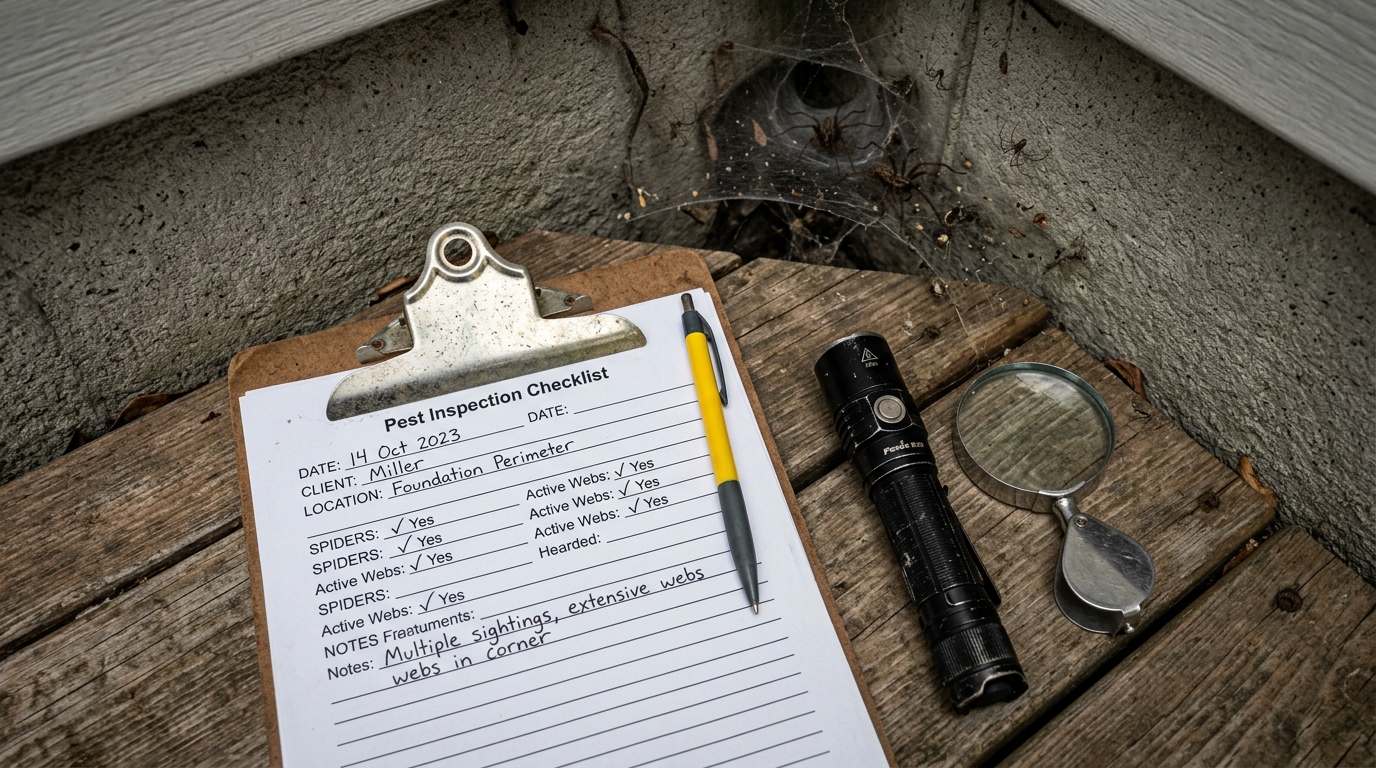
Who this guide is for and what you are deciding
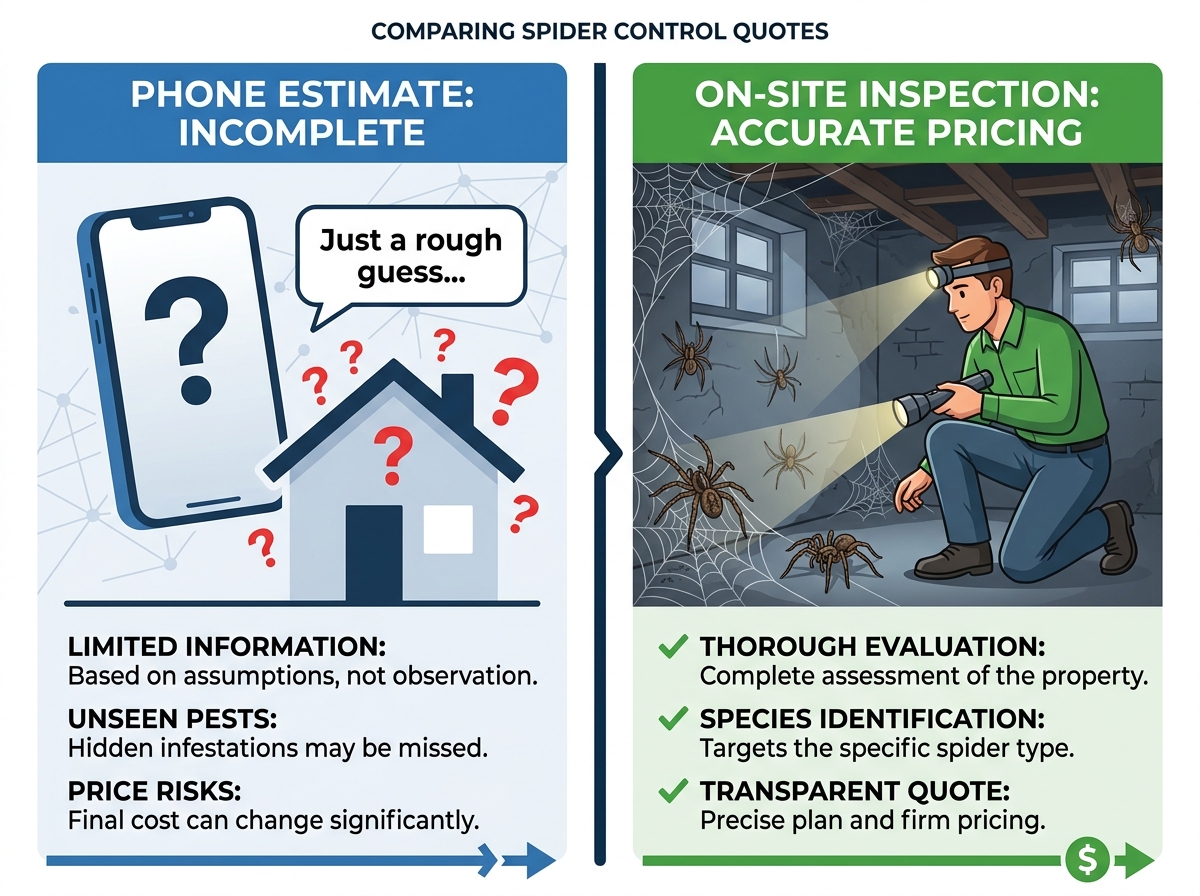
This guide is for the homeowner who wants one thing: a price to get rid of spiders. Maybe you see them in the basement, the garage, or the corners of the ceiling. You call a company, and instead of a flat number you get a version of the same reply: "What are you dealing with?" and then "We need to inspect first."
You are trying to decide two things. First, how much this will cost. Second, whether the process feels fair before you commit. Both decisions get easier once you understand why the quote is tied to an inspection.
What you are really weighing
- Accuracy vs. speed. A phone estimate is fast but usually a wide guess. An in-person quote is slower but precise.
- One-time vs. recurring. Spiders are often a symptom of other prey insects. Many providers price recurring plans, not single visits.
- Fit for your home. A finished basement, a crawl space, and heavy exterior vegetation all change the plan.
HomePest Match is an independent matching guide, not a pest-control company. We do not treat homes or send technicians. We explain how the industry works and connect you with licensed providers when you choose to request quotes. You always start the contact; providers do not cold-call you. Note that intake calls are often recorded for quality assurance, and that disclosure is read to you at the start.
Keep one idea in mind as you read: the inspection is not a sales gate. It is the step that lets a professional quote a real number instead of a placeholder.
The core misunderstanding: why a real quote needs an in-person inspection
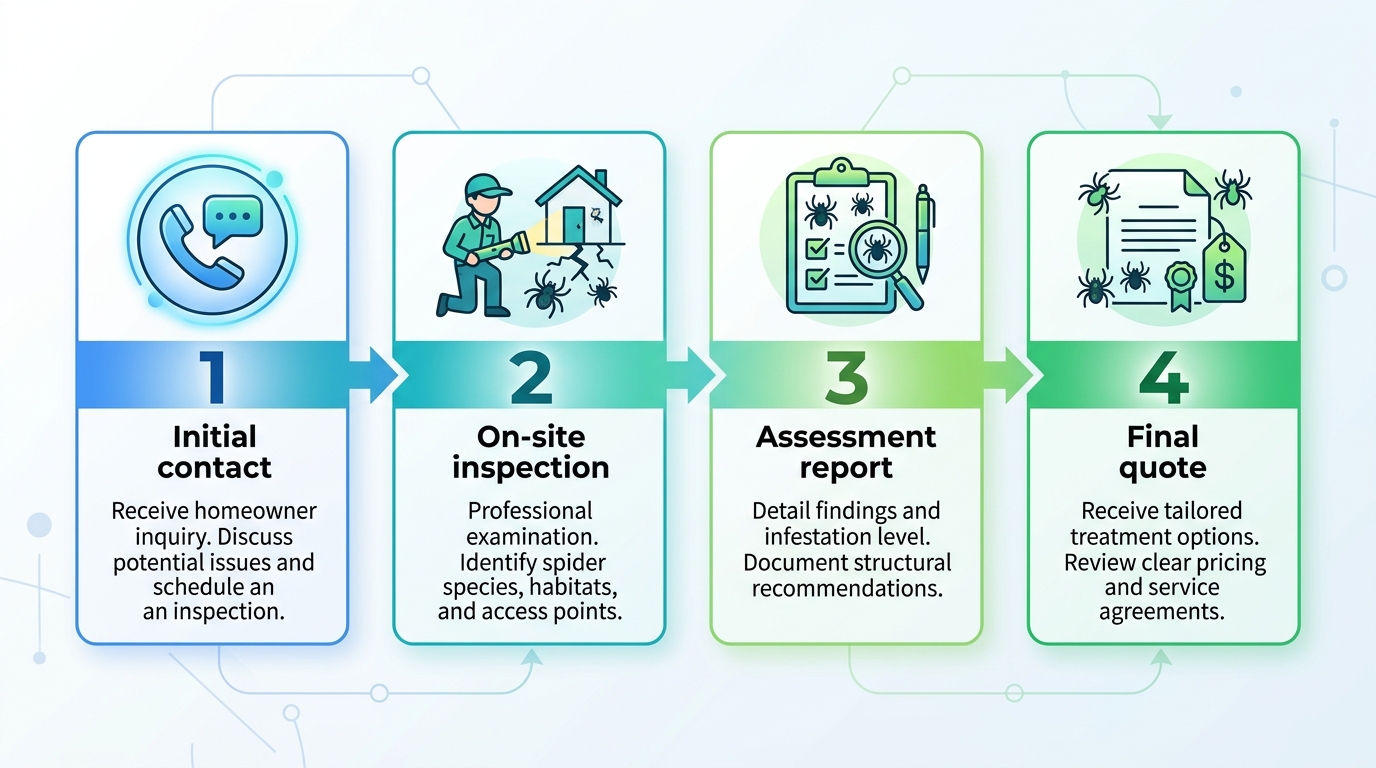
This is the heart of the confusion. Callers expect a spider quote the way they expect a haircut price. But spider treatment is not a fixed product. It is a plan built around your specific structure and the insects living in and around it. That is why nearly every reputable provider says the same thing: we have to see it first.
Why a phone number would be misleading
A technician cannot price what they cannot measure. Over the phone, they do not know your square footage, how many entry points exist, whether you have a crawl space or slab, or which spider species you have. Quoting blind would either overcharge you to be safe or undercharge and fail. An on-site visit removes that guesswork.
Spiders are a downstream problem
Most house spiders are predators. They stay because your home feeds them other insects — flies, gnats, ants, or roaches. A good inspection looks for that prey base, because killing spiders without cutting the food supply invites them back. This is a core idea in Integrated Pest Management (IPM), the science-based approach promoted by university extension services that combines inspection, prevention, and targeted treatment rather than blanket spraying.
What "required inspection" is not
Some pests, such as bed bugs, always require an inspection because guessing is impossible. Spiders sit in a similar bucket for most companies. The inspection also confirms the treatable area, so the guarantee they later offer means something.
So when the intake specialist asks for your ZIP code and address before pricing, that is not a runaround. They are checking service coverage and setting up the visit that produces your actual quote. You can read more about how coverage checks work in our ZIP code coverage guide.
Recognizing the signs before your inspection
You will get a better quote if you can describe what you see. Inspectors ask "what are you dealing with?" for a reason — your observations narrow the plan. Walk your home before the visit and note the following.
Web type and location
- Cobweb tangles in corners, closets, and basements usually point to common house spiders or cellar spiders.
- Funnel or sheet webs low in garages, wood piles, and crawl spaces can indicate ground-dwelling species.
- Egg sacs — small silk balls — signal an established population, not a single wanderer.
Where they concentrate
Spiders gather where prey and moisture meet: basements, garages, window wells, eaves, and around exterior lights that draw insects at night. Clusters in these zones tell an inspector where harborage — the sheltered spots pests hide and breed — is strongest.
Species that change the plan
Two groups matter for safety. The brown recluse hides in dark, undisturbed storage and behind furniture. The black widow favors garages, sheds, and low outdoor structures. Both can deliver medically significant bites, and the U.S. Centers for Disease Control and Prevention (CDC) lists them as venomous species of concern. If you suspect either, tell the intake specialist. It raises the priority and shapes where the technician treats.
Clues that other pests are present
Because spiders follow food, note anything else: ant trails, roaches in the kitchen, or gnats near drains. A spider problem stacked on a roach problem is common, and providers will want to address both. Our spider control overview and cockroach control page explain how these problems connect.
Write these notes down. A clear description shortens the inspection and sharpens the estimate.
What actually works — and when do-it-yourself falls short
Understanding the methods helps you judge whether a quote is reasonable. Professional spider control rarely relies on one spray. It layers several tactics.
The professional approach
- Exclusion. Sealing gaps around pipes, vents, doors, and windows. This is the most durable fix because it stops entry.
- Web and egg-sac removal. Physically de-webbing eaves and corners removes existing populations and makes new activity easy to spot.
- Targeted residual products. Applied to cracks, crevices, and perimeter bands rather than sprayed everywhere. The U.S. Environmental Protection Agency (EPA) registers these pesticide products and sets label rules that licensed applicators must follow.
- Prey suppression. Treating the insects spiders eat, so the food source shrinks.
Why DIY often fails
Store sprays kill the spider you hit but leave the population and the food source intact. Homeowners also miss harborage in crawl spaces and wall voids, and they rarely seal entry points. Within weeks, new spiders arrive from the same untreated zones. DIY also carries risk with venomous species, where disturbing a nest without protection is dangerous.
When to bring in a professional
Call for a quote when you see egg sacs, repeat activity after treating, a suspected recluse or widow, or spiders paired with another pest. A licensed technician brings species identification, labeled products, and access to voids you cannot reach safely. If you want a broader view of choosing a plan, see our service plans and pricing guide.
The goal is not a single knockdown. It is a lower baseline that stays low, which is why recurring plans dominate this category.
What to ask when you request your quote
The intake call is short. The specialist will confirm who you are, your address, and "what are you dealing with." You do not need an existing account to get a quote — first-time callers are the norm. Use these questions to make the visit count.
Before the inspection
- Is the on-site inspection part of the quote, and is there a charge for it? Policies vary; ask plainly.
- Are you licensed in my state? Verify the applicator's license through your state's structural pest-control regulatory board.
- Do you service my full address, including rural or outlying areas?
About the plan and price
- Is this a one-time visit or a recurring plan? Many providers do not guarantee one-time spider work.
- What does the quote include — interior, exterior, de-webbing, exclusion?
- What is the guarantee, and what triggers a free re-service between visits?
- Which products will you use, and are they EPA-registered for my situation?
About logistics
- How soon can the inspection happen, and how long does it take?
- What should I move or clear before the technician arrives?
- How is billing set up for recurring service? Our billing and payment setup guide covers what to expect.
Because you initiate every call, keep your notes and questions ready. Providers respond to the details you give, so a precise description of species, locations, and other pests yields a tighter estimate and fewer surprises on visit day.
Cost factors that shape your spider quote
We do not publish set prices, because honest figures depend on your home. Instead, here are the factors an inspector weighs to build your number. Understanding them helps you read a quote critically.
Structure and size
- Square footage and stories. More area and more levels mean more treatable surface.
- Foundation type. Crawl spaces and unfinished basements add harborage and inspection time.
- Entry points. Older homes with many gaps require more exclusion labor.
Severity and species
- Population size. Scattered webs cost less to address than an established colony with many egg sacs.
- Venomous species. Suspected recluse or widow activity adds careful, targeted work.
- Co-occurring pests. A spider-plus-roach problem often shifts you toward a combined plan.
Surroundings
- Exterior vegetation and lighting. Dense shrubs against the wall and bright night lighting feed the prey spiders hunt.
- Moisture. Damp zones draw insects, which in turn draw spiders.
Plan structure
Recurring service — monthly, bimonthly, or quarterly — usually prices lower per visit than a stand-alone call, and it carries a guarantee between visits. A single initial treatment is often higher because it does the heavy first cleanup. For a side-by-side sense of recurring frequencies, see our service plans and pricing guide.
When you compare quotes, match scope to scope. A cheaper number that skips exclusion or de-webbing is not cheaper if the spiders return. The inspection exists precisely so these factors are counted before you pay.
Common questions
Why won't a company just give me a price for spiders over the phone?
Because a fair price depends on your square footage, foundation type, entry points, and the spider species present. None of that can be measured by phone. The in-person inspection lets the technician quote a real number instead of a guess.
Do I need an existing account to get a quote?
No. First-time callers are the standard. The specialist will collect your name, address, and a description of the problem, then confirm service coverage and set up the inspection that produces your estimate.
Is the inspection free, and how long does it take?
Policies vary by provider, so ask directly whether the on-site visit carries a charge. A spider inspection typically takes 20 to 45 minutes, depending on home size, foundation type, and how many harborage zones the technician checks.
What if no provider covers my rural address?
Coverage is set by ZIP code and drive distance. If a national brand does not reach you, an independent local operator often does. Check your area first using our ZIP code coverage guide, then request quotes from providers that confirm your full address.
How do I verify that a provider is licensed?
Ask for their applicator license number and confirm it with your state's structural pest-control regulatory board. Licensed technicians must follow EPA product labels, which sets the legal baseline for safe, targeted treatment.
Can I get one visit instead of a recurring plan?
Sometimes, but many providers do not guarantee one-time spider work because spiders return when their insect food source remains. A recurring plan usually costs less per visit and includes re-service between appointments if activity comes back.
Related: spider control overview · ZIP code coverage guide · service plans and pricing guide · billing and payment setup guide · cockroach control page