Termites vs. Flying Ants: How to Tell the Difference in Florida
You saw winged bugs after a Florida rainstorm and want to know if it is serious. Swarmer termites signal an active colony and need fast attention. Flying ants are mostly a nuisance. This guide shows the differences so you know if you should act now.
Calls may be recorded for quality and matching purposes.
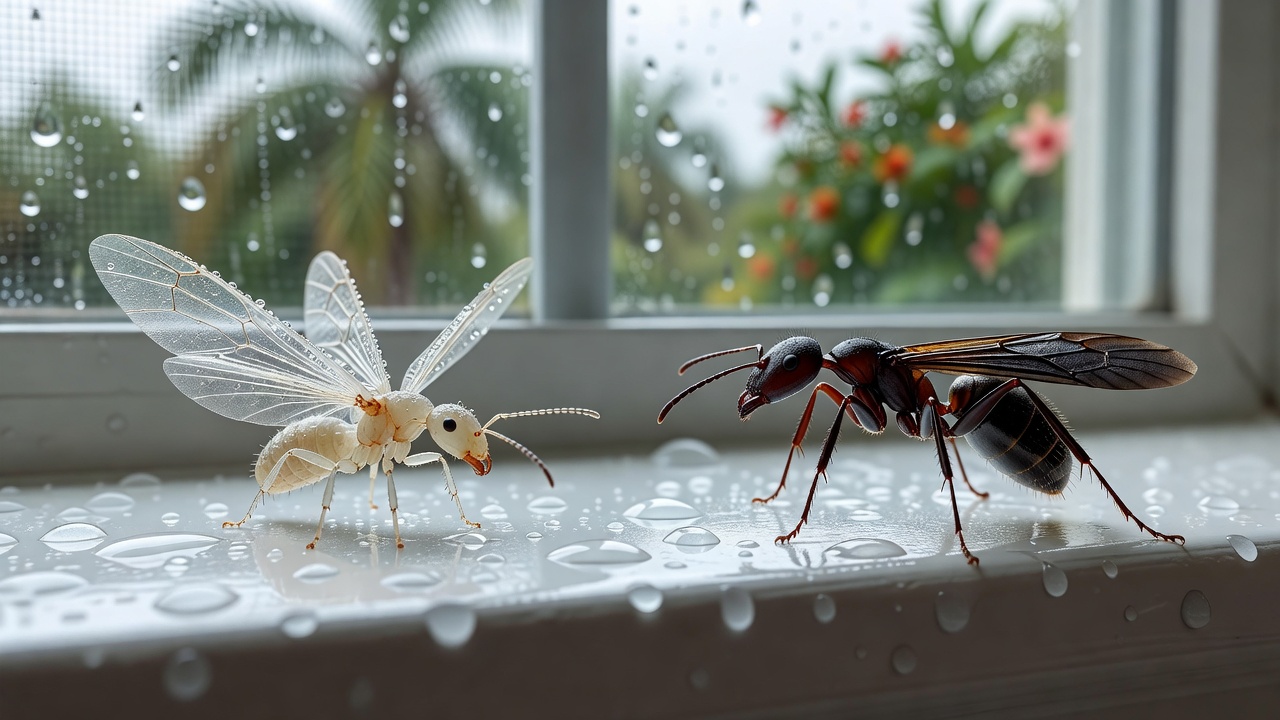
Who this guide is for and what you're trying to decide

This guide is for Florida homeowners who spotted winged insects and feel unsure. Maybe they appeared near a window after heavy rain. Maybe you found a small pile of shed wings on a sill. You want one clear answer: is this urgent or not?
Here is the honest short version. Winged termites, called swarmers, mean a mature colony is nearby. In Florida, that colony may already be feeding on wood. Flying ants are far less serious. They swarm to mate, then move on.
The stakes are different. A termite colony can quietly damage floor joists, framing, and door frames for months. Ants rarely harm your home's structure. So telling them apart is not a small detail. It decides whether you request an inspection this week or simply sweep up and move on.
You do not need to be an expert. You need three quick checks: the waist, the wings, and the antennae. We cover each below. If you are still unsure after looking, treat it as a termite until a licensed inspector confirms otherwise. That caution costs you nothing and can save thousands.
What most homeowners get wrong (the key difference)
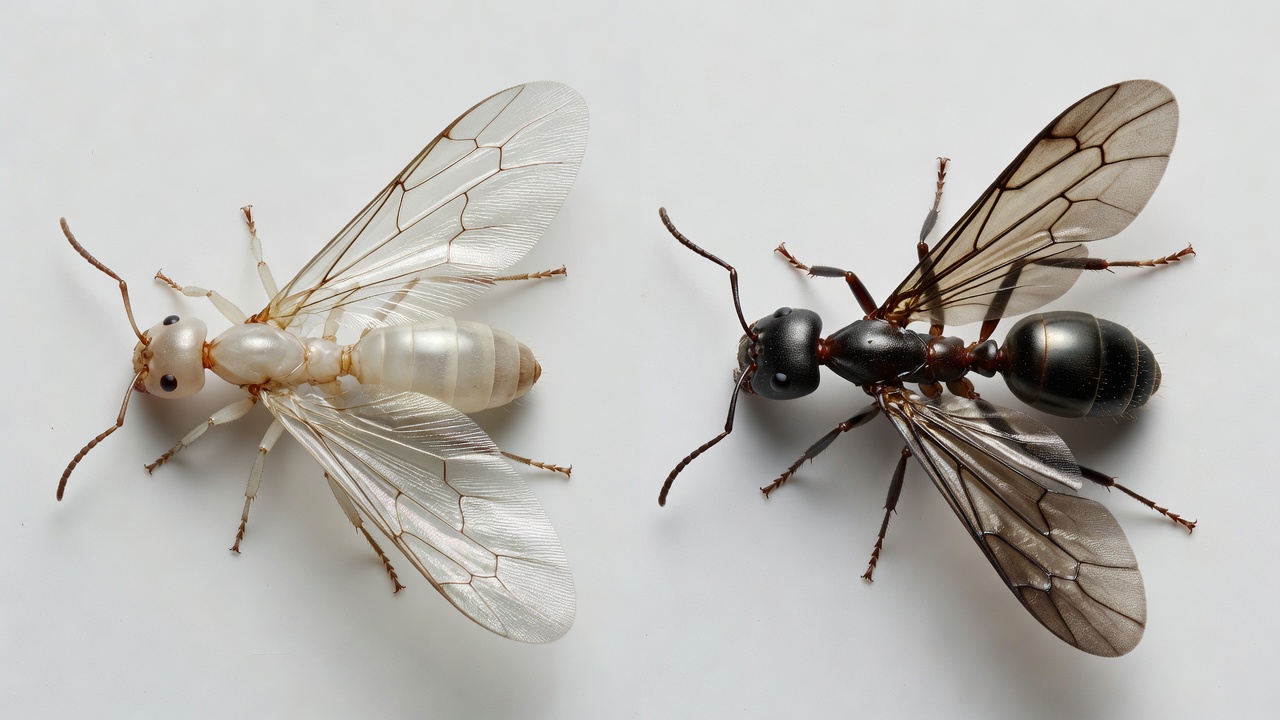
The biggest mistake is assuming all winged bugs after rain are ants. In Florida, rainy season swarms are common for both. Guessing wrong is the real risk. Here is how to check with confidence.
1. Look at the waist
This is the fastest tell. A termite has a straight, thick body with no pinched middle. An ant has a clear narrow waist, like a tiny hourglass. If the body looks like one smooth tube, think termite.
2. Compare the wings
A termite has four wings, all the same length. They stretch well past the body and often look milky or clear. An ant also has four wings, but the front pair is longer than the back pair. Termite wings also break off easily. Finding loose wings on a windowsill is a strong termite sign.
3. Check the antennae
Termite antennae are straight and look like tiny beads. Ant antennae are bent, with a clear elbow shape.
Quick summary: straight waist, equal wings, straight antennae means termite. Pinched waist, uneven wings, elbowed antennae means ant. The University of Florida IFAS Extension uses these same three markers for field identification.
Signs your winged-insect problem is bigger than one bug
One insect on a screen is not proof of trouble. Patterns are. Watch for these signals inside Florida homes.
Shed wings in piles
Termite swarmers drop their wings soon after flight. Small heaps of clear wings near windows, doors, or light fixtures point to a swarm indoors. That means a colony is likely close.
Mud tubes on walls or foundation
Subterranean termites build pencil-width mud tubes to travel from soil to wood. Check your slab edge, garage walls, and crawl space. These tubes are a strong sign of active feeding.
Damaged or hollow wood
Tap door frames and baseboards. A dull, hollow sound can mean termites ate the inside. Look for blistered paint or floors that feel soft.
Frass from drywood termites
Drywood termites, common in coastal Florida, push out tiny wood-colored pellets called frass. Small sand-like piles under wood trim are a warning.
If you see swarmers plus any of these signs, do not wait. Learn what an inspector checks in our Florida termite inspection guide. Early confirmation limits the repair bill.
What actually works, and when DIY is not enough
Identification is step one. Treatment is step two, and it depends on the species. This is where do-it-yourself sprays usually fall short.
Store sprays hit the messenger, not the colony. Killing a few swarmers does nothing to the nest. Subterranean termites live underground or inside walls. You cannot reach them with a can from the hardware store.
Real termite control uses proven methods that trained technicians apply:
- Liquid soil treatments create a treated zone around the foundation.
- Bait systems place slow-acting bait that workers carry back to the colony.
- Drywood treatments may include localized wood treatment or, in heavy cases, whole-structure fumigation.
The right choice depends on the species and how far damage has spread. That is why an in-person estimate matters. A technician measures the home, checks access points, and identifies the termite type. The U.S. EPA recommends an integrated approach that combines inspection, targeted treatment, and prevention.
For flying ants, control is simpler. Sealing entry points and treating trails often handles it. See our Florida ant control guide for those steps. For termites, book a licensed inspection before choosing any plan.
What to ask when you request quotes
Once you suspect termites, request an in-person estimate. You start the contact yourself. Phone menus at big companies often ask for your ZIP code and pest type first, so have those ready. Ask these questions to compare fairly.
Inspection and species
Ask if the inspection is on-site and which termite species they found. Subterranean and drywood termites need different treatments. A vague answer is a red flag.
Method and scope
Ask which method they recommend and why. Confirm whether the price covers the whole home or one zone. For larger lots, ask exactly what area gets treated.
Warranty and follow-up
Ask about the guarantee. Does it include re-treatment if termites return? How long does coverage last? Get the terms in writing.
Licensing and timeline
Confirm the company holds a Florida pest-control license. Ask how soon they can start and how long treatment takes.
Our guide to choosing a Florida pest-control company lists more questions. You can also request Florida quotes to compare local providers.
Local notes for Florida homeowners
Florida sits in one of the highest termite-pressure zones in the country. Warm, humid weather and heavy summer rain fuel large swarms. Where you live shapes which termite you are likely to face.
- Coastal cities like Miami, Fort Lauderdale, and West Palm Beach see heavy drywood termite activity in exposed wood.
- Gulf Coast areas near Tampa, Fort Myers, and Naples deal with both drywood and subterranean species.
- Central Florida around Orlando and Kissimmee sees frequent subterranean swarms after rain.
- North Florida near Jacksonville, Tallahassee, and Pensacola faces strong subterranean pressure in spring.
- Interior counties like Ocala, Polk, and Lake County report swarms tied to wet-season storms.
South Florida is also home to the aggressive Formosan subterranean termite. Its colonies grow huge and spread fast. If you live near Miami or the Keys, treat any swarm seriously.
Peak swarm season runs from spring into the rainy summer months. That is when most Florida homeowners spot winged insects at once. City-specific help is on our Florida termite control page and pages like Miami pest control.
Cost factors to expect (no fake prices)
Termite treatment costs more than routine pest service, and prices vary. No honest company quotes a firm number by phone without seeing the home. Here is what shapes your estimate.
- Home size: larger square footage means more area to treat.
- Termite species: drywood and subterranean need different methods. Whole-structure fumigation costs more than a spot treatment.
- Severity: a mature, spread-out colony takes more work than an early catch.
- Access: crawl spaces, slab type, and tight foundations affect labor.
- Plan type: one-time treatment differs from an ongoing monitoring plan with re-inspections.
How this plays out: Picture a mid-size Orlando home with an early subterranean swarm. A liquid soil treatment plus an annual monitoring warranty will cost less than a full fumigation for a Miami home with widespread drywood damage. The gap comes from method and severity, not brand alone.
Catching swarmers early usually lowers the total. Waiting raises both the treatment and any repair costs. For general pricing structure, see our Florida pest control cost guide. When you are ready, you can request local quotes.
Common questions
Are winged ants after rain a sign of termites?
Not always, but they can be. Both termites and ants swarm after Florida rain. Check the waist, wings, and antennae before you assume it is just ants. If the body has no pinched waist, treat it as a possible termite.
How urgent is it if I find termite swarmers indoors?
Swarmers inside usually mean a colony is nearby, so act quickly. Save a few bugs or shed wings in a bag. Then request an in-person inspection to confirm the species and any damage.
Why won't a company give me a termite price over the phone?
Termite pricing depends on home size, species, and how far damage spread. A technician must see the home to be accurate. Phone menus usually collect your ZIP code and pest type, then set up an on-site visit.
Can I treat termite swarmers myself with store spray?
You can kill the visible swarmers, but that does not touch the colony. The nest lives underground or inside wood. Effective control needs professional soil treatment, bait systems, or fumigation depending on the species.
What is the difference between drywood and subterranean termites in Florida?
Subterranean termites live in soil and build mud tubes to reach wood. Drywood termites live inside the wood itself and push out pellet-like frass. Coastal Florida sees more drywood, while inland areas see more subterranean activity.
When do termites swarm in Florida?
Most swarms happen from spring into the humid summer rainy season. Warm, wet weather triggers large flights. That is when many homeowners notice winged insects around lights and windows at the same time.
Related: Florida termite control page · Florida termite inspection guide · Florida ant control guide · request Florida quotes · Florida pest control cost guide