Cockroach Identification: Types of Cockroaches and the Signs of Infestation
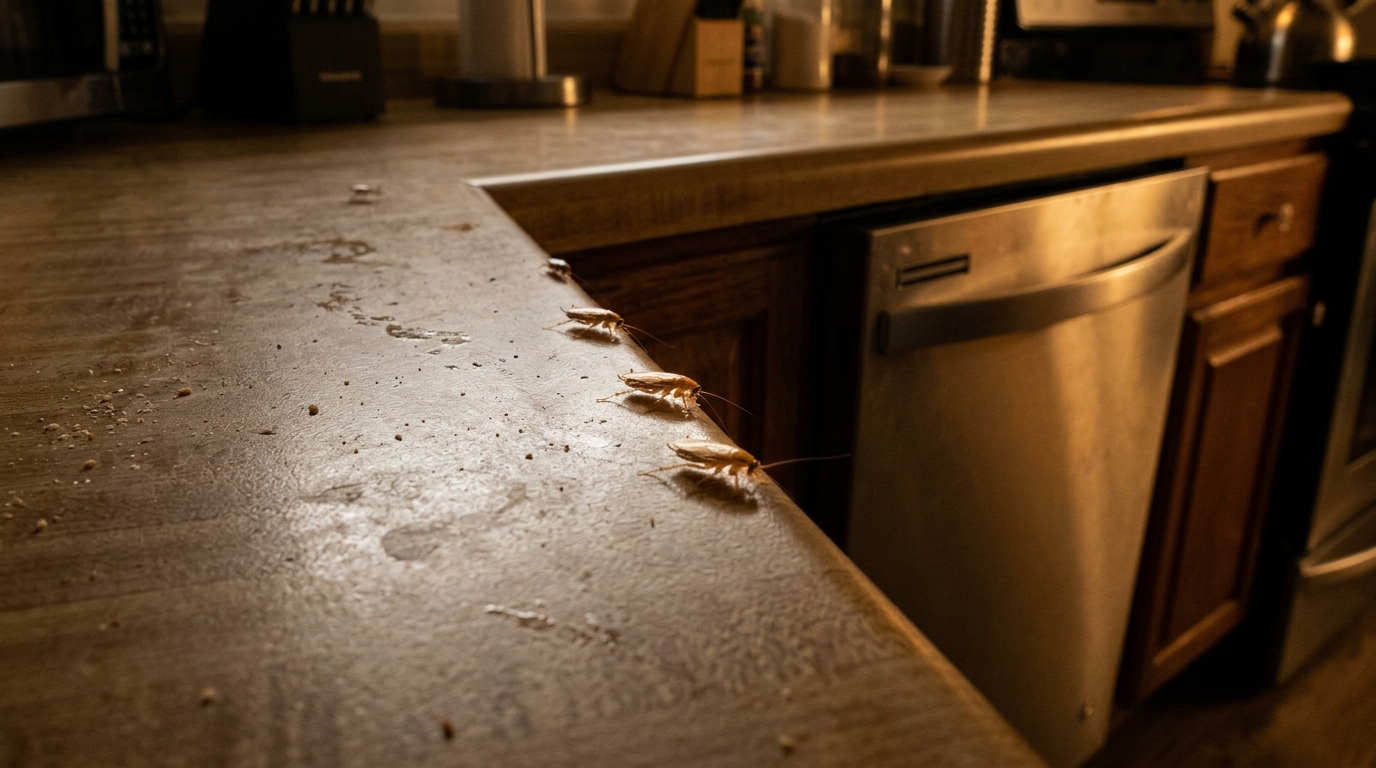
Small, light-tan roaches darting across your kitchen or bathroom at night are almost always German cockroaches — the fastest-breeding indoor species. This guide shows how to tell them apart from other roaches and how to read the signs that reveal how bad the infestation really is. HomePest Match is an independent information and provider-matching site, not a pest-control company.
Calls may be recorded for quality and matching purposes.
Who this guide is for and what you're deciding

You rent an apartment. You flip on the kitchen light at night and small, pale-brown insects scatter behind the stove or under the sink. You want two things fast: a name for what you're seeing, and a plan to make it stop.
This guide is built for exactly that moment. Renters face a harder version of the problem than homeowners. Roaches move through shared walls, plumbing chases, and utility voids, so a unit next door can reseed yours. That changes what actually works and how you talk to your landlord or a provider.
Here is the decision you're really making:
- Identify the species. Different roaches need different strategies. A German cockroach problem is not solved the same way as an occasional invader wandering in from a drain.
- Judge the severity. A single roach at night means something different than dozens on the wall. Severity drives whether spot treatment can work or whether you need a full, structured program.
- Decide who acts. In a rental, pest control is often the landlord's legal duty. Knowing the species and severity helps you report the problem clearly and get service scheduled.
By the end, you'll be able to name the pest, describe the infestation in the terms a pest professional uses, and understand why over-the-counter sprays so often fail against German cockroaches. If you want the local-provider side, our overview of cockroach control signs and questions pairs well with this guide.
What renters get wrong: German roaches vs. everything else
This is the core confusion, so let's settle it. The small, light-tan roaches appearing at night in your kitchen and bathroom are the species that matters most: the German cockroach (Blattella germanica). Getting the identification right changes everything, because German cockroaches behave differently from the large roaches most people picture.
How to tell German cockroaches apart
- Size: small — about half an inch (12–16 mm) as adults. If it's tiny and pale, suspect German first.
- Color: light tan to golden brown.
- The key mark: two dark, parallel stripes running lengthwise down the pronotum — the shield-shaped plate right behind the head. Those twin racing stripes are the signature.
- Where you see them: indoors, warm and humid — behind refrigerators, under sinks, in cabinet hinges, near the dishwasher and coffee maker.
Why people misread the signs
Homeowners often assume a big roach means a big problem and a small roach means a minor one. It's the reverse. Large roaches are usually occasional invaders. The small German cockroach is the one that establishes breeding populations indoors and multiplies fastest.
Compare the look-alikes:
- American cockroach: large (1.5 inches), reddish-brown, with a pale figure-eight pattern behind the head. Prefers sewers, drains, and basements.
- Oriental cockroach: dark, almost black, glossy, sluggish; lives in damp, cool spots like drains and crawl spaces.
- Brown-banded cockroach: also small, but with two lighter bands across the wings and body; spreads to warm, high spots like upper cabinets and behind picture frames, not just the kitchen.
Confirm the twin pronotum stripes and the small size, and you almost certainly have German cockroaches. That single identification determines the treatment path.
Reading infestation severity: what the signs really mean
Once you know the species, the next question is how bad it is. German cockroaches hide in tight cracks and come out in the dark, so what you see by day tells you a lot. Entomologists at university extension programs use these same indicators to rate severity.
Signs, from mild to severe
- Light: one or two roaches seen only at night when you turn on a light. Droppings are sparse. This still means a breeding population may be starting.
- Moderate: several roaches at night, plus droppings that look like ground black pepper or coffee grounds along cabinet edges and inside drawers. You may find shed skins (nymphs molt several times as they grow).
- Heavy: roaches visible in daylight, on walls or countertops. Seeing them by day means the hiding spots are overcrowded — a strong signal of a large population.
- Severe: a musty, oily odor from the pheromones and secretions of a dense colony; egg cases everywhere; roaches in adjacent rooms.
The egg case is a key clue
German cockroaches carry a tan, purse-shaped egg case called an ootheca. Each capsule holds roughly 30 to 40 eggs, and females carry it until just before hatching. Finding oothecae wedged in cabinet hinges, drawer runners, or the gap behind the stove tells you the population is reproducing on site — not just wandering in.
Where to inspect
Focus on warm, dark, moist harborage: motor housing behind the refrigerator, under-sink cabinets, the void beneath the dishwasher, the seam where countertop meets wall, and cabinet corners. Use a flashlight after dark. A sticky monitoring trap placed in these zones for a few nights gives you a count you can report accurately.
What actually works — and when DIY fails
German cockroaches are the reason many over-the-counter efforts fail. Understanding the mechanism explains why.
Why sprays and foggers backfire
Aerosol sprays and "bug bomb" foggers are repellent contact killers. They scatter the colony deeper into wall voids and shared plumbing instead of eliminating it. Foggers rarely reach the tight cracks where German cockroaches actually live. Worse, they can disrupt the bait stations that do work.
The methods that work
- Gel baits. These are the backbone of German cockroach control. A roach eats the bait, returns to harborage, and the active ingredient spreads through the colony via feces and cannibalism — a chain-kill effect. Place small dots at cabinet hinges, corners, and along edges near appliances, not in open floor space.
- Insect growth regulators (IGRs). These stop the population from rebuilding. Integrated Pest Management (IPM) programs pair baits with an IGR such as hydroprene, which mimics juvenile hormone so nymphs never mature into breeding adults. Products like these must be registered by the U.S. Environmental Protection Agency for the specific site and pest.
- Sanitation and exclusion. Remove competing food and water. Fix drips, wipe grease, store food sealed, and seal cracks. Baits work far better when roaches are hungry.
- Monitoring. Sticky traps confirm whether the population is dropping.
When DIY isn't enough
DIY can knock down a light, early infestation. It fails when the population is moderate to heavy, when roaches appear by day, or when you live in a multi-unit building where neighbors are also infested. Shared walls reseed treated units, so building-wide, professional treatment is usually the only durable fix. Bait aversion — where a colony refuses a bait it has learned to avoid — is another reason professionals rotate active ingredients.
For how a reported problem turns into scheduled service, see what to expect when you report a pest problem.
What to ask when you request quotes or service
Once you've identified German cockroaches and gauged severity, you're ready to request service. Renters should first check the lease and local housing rules — in many places, treating an infestation is the landlord's responsibility. Report the problem in writing with the species and severity signs you found.
When you contact a provider, note that calls are often recorded for quality assurance, and you always initiate contact. Ask these questions:
- Do you treat German cockroaches specifically? Confirm they use gel baits and an IGR, not just perimeter spraying.
- How many visits are included? German cockroach programs almost always need follow-up visits, often two to four over several weeks, to break the reproductive cycle.
- Do you inspect adjacent units? In an apartment, this is decisive. Ask whether the plan addresses shared walls and plumbing chases.
- What preparation do I need to do? Emptying cabinets and cleaning food debris improves bait uptake.
- Is there a guarantee or re-service window? Ask what happens if roaches return between visits.
- Which products are used and are they EPA-registered for indoor use? A professional should answer this clearly.
Describe what you found: species, where you see them, whether you see them by day, droppings, egg cases, and any odor. That detail lets a provider scope the job accurately. To understand how quotes are built and what drives the price, read our guide on pest control service plans and pricing. HomePest Match matches you with local providers; we do not perform treatments and we do not offer free inspections.
Cost factors to expect (no fake prices)
Pricing varies widely by region, unit size, and severity, so treat any figure you see online as a published range, not a promise. What matters more is understanding the factors that move the price up or down. These are the levers a provider weighs when scoping a German cockroach job.
What raises the cost
- Severity. A heavy or severe infestation needs more product and more follow-up visits than a light one.
- Number of visits. German cockroach control is rarely one-and-done. Programs that break the breeding cycle require repeat service, and each visit adds cost.
- Multi-unit spread. If neighbors are infested, building-wide treatment is more involved than a single unit.
- Access and clutter. Cluttered cabinets and blocked appliances slow inspection and reduce bait effectiveness, sometimes requiring extra time.
What lowers the cost
- Early action. Treating a light infestation before it multiplies is cheaper than reversing a heavy one.
- Good preparation. Cleaning and emptying cabinets before service lets baits work faster, which can shorten the program.
- Ongoing plans. Recurring service can spread cost over time and catch reinfestation early.
Because German cockroaches breed quickly, the biggest cost driver is usually how long you wait. A population that starts with a few nighttime sightings can become a heavy infestation within weeks. Reporting early keeps both the treatment scope and the price smaller. Authorities like university extension services consistently emphasize that combining sanitation, baiting, and monitoring produces the most cost-effective long-term control.
Common questions
How do I know if the small roaches in my kitchen are German cockroaches?
Look for a small, light-tan insect about half an inch long with two dark parallel stripes on the shield behind its head. If it's small, pale, and lives indoors near warmth and moisture, it's almost certainly a German cockroach. Large reddish or dark roaches are different species.
Seeing roaches during the day — does that mean the infestation is severe?
Usually yes. German cockroaches are nocturnal and hide in cracks. When you see them in daylight on walls or counters, their harborage is overcrowded, which signals a large, established population. That level typically needs professional, repeat treatment rather than DIY.
Why didn't the spray or fogger I bought get rid of them?
Most sprays and foggers are repellent and scatter the colony deeper into walls and plumbing instead of killing it. They also miss the tight cracks where German cockroaches live. Gel baits paired with an insect growth regulator work far better because they spread through the colony.
I rent my apartment. Whose job is it to pay for treatment?
In many areas, treating an infestation is the landlord's responsibility under housing codes or the lease. Report the problem in writing, describing the species and the signs you found. If neighbors are also affected, ask for building-wide treatment, since shared walls reseed single units.
What's the tan, purse-shaped thing I found in a cabinet hinge?
That is an ootheca, the German cockroach egg case, and each one holds roughly 30 to 40 eggs. Finding oothecae in hinges, drawers, or behind the stove means the roaches are breeding inside your unit, not just wandering in. It's a strong sign to schedule service promptly.
How many treatment visits should I expect for German cockroaches?
Plan on more than one. Because these roaches breed so fast, most programs use two to four visits over several weeks to break the reproductive cycle. Ask any provider how many follow-ups are included and whether there's a re-service window if roaches return.
Related: cockroach control signs and questions · what to expect when you report a pest problem · pest control service plans and pricing