Pest Control Service Areas by State and Region: How to Confirm Local Coverage Before You Book
Many pest-control brands operate in only a few states, so the number you call may not cover your home at all. Before you schedule ant treatment or ask for an estimate, confirm the company services your ZIP code. This guide shows how service areas work and how to check yours in minutes.
Calls may be recorded for quality and matching purposes.
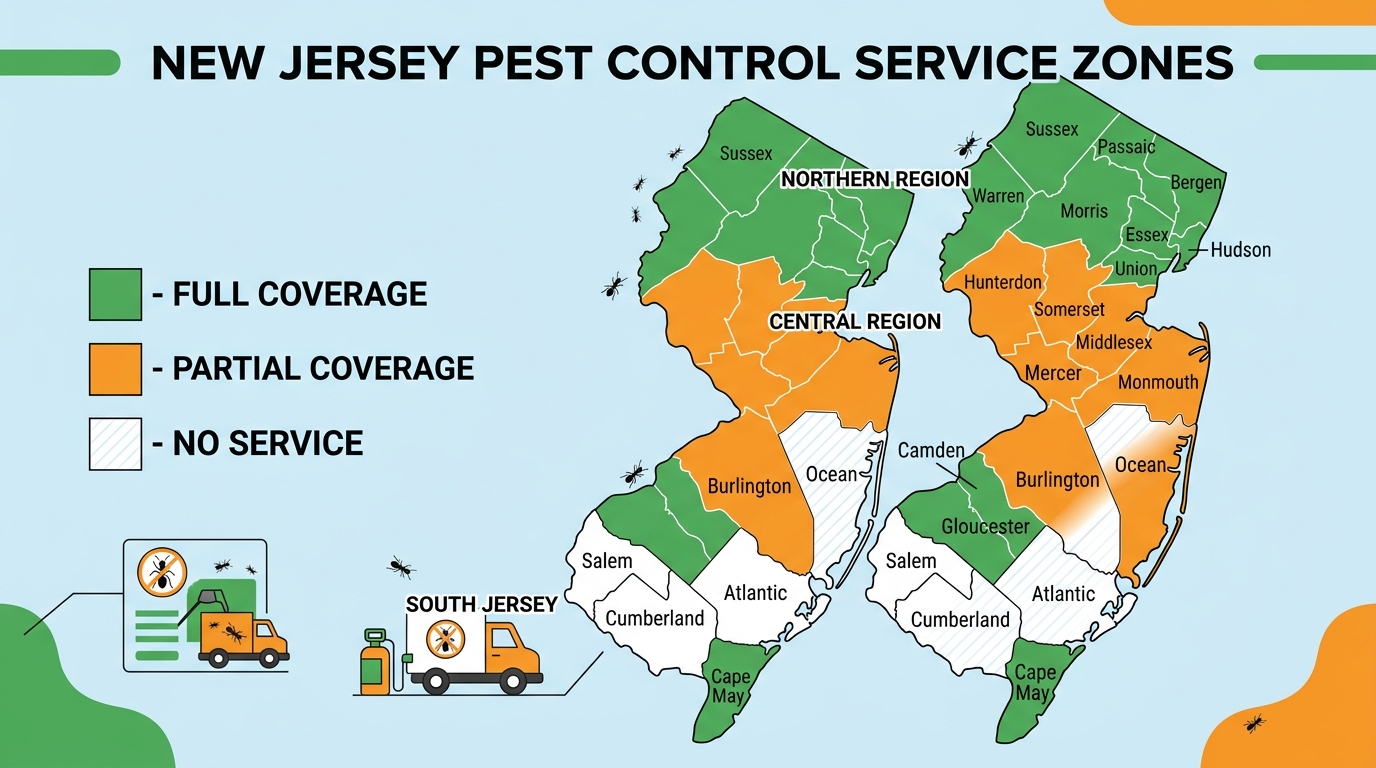
Who this is for and what you are deciding
You have ants marching across the kitchen counter or trailing along a baseboard. You want a professional visit and a clear estimate. So you find a pest-control company online, call the number, and start pressing menu options. Then you learn the company only works in another state. That wasted call is the exact problem this page solves.
This guide is for homeowners who want to hire pest control and get a price without discovering, mid-call, that the provider does not cover their area. HomePest Match is an independent information and provider-matching site. We are not a pest-control company, and you always start the contact yourself.
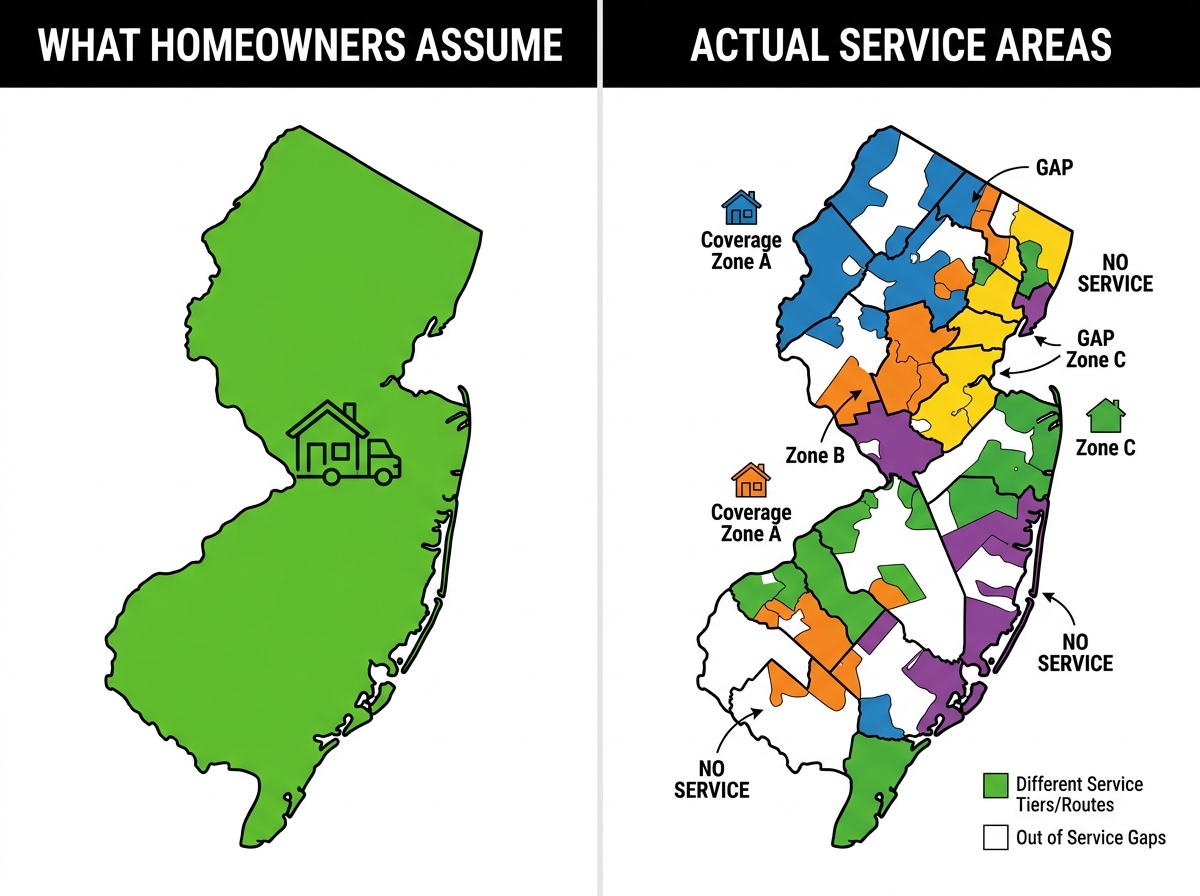
The core decision is simple but easy to get wrong: does this provider actually service my address? A national-sounding brand name does not guarantee national coverage. Many well-known companies are regional. Some franchise names cover one metro. Others operate in a cluster of states and nowhere else.
You are really deciding three things:
- Coverage: Does the company serve your state, county, and ZIP code?
- Fit: Does it treat your specific pest, such as ants, with the plan type you want?
- Price and timing: Can it give you an estimate and an appointment window that works?
Get coverage confirmed first. Fit and price only matter if the truck can reach your driveway. The rest of this guide walks that sequence in order, so you spend your time on providers that can actually help.
What homeowners misunderstand about service areas
The most common and costly misunderstanding is this: a company that looks national may only operate in one state or region. A caller with ants in California, for example, may reach a phone menu for a company headquartered and licensed only in New Jersey. The website looked broad. The service area was not.
Here is why that happens. Pest control is a licensed, state-regulated trade. Each state has its own structural pest-control licensing body, its own applicator certification rules, and its own registered-product lists. The U.S. Environmental Protection Agency registers pesticide products at the federal level, but states control who may apply them and where. So a company must hold licenses in every state it treats. Many choose to license in just a few.
Why brand names mislead you
Three patterns cause confusion:
- Franchises: One brand can be a network of independently owned offices. The office nearest you may not exist.
- Lead-forwarding numbers: A phone number online may route to a call center that books only certain territories.
- Regional operators with national websites: The site ranks broadly, but the trucks stay local.
How to avoid the wasted call
Before dialing, look for a service-area page, a coverage map, or a ZIP-code checker on the company's own site. Read the fine print in the footer, which often lists licensed states. If a phone menu asks you to enter your five-digit ZIP code early, that is a good sign the system screens coverage. If you cannot confirm coverage in under two minutes, treat the provider as unconfirmed and move on. Confirming coverage first is the single habit that prevents the frustration this page is built to fix.
Signs a provider does not cover your area
You can often spot a coverage mismatch before you finish the call or the web form. Watch for these signals.
Website signals
- No service-area page or map. Reputable regional companies publish the states or counties they serve. Absence is a warning.
- A footer that lists only a few states. Company footers and license disclosures often name every state where the firm holds a structural pest-control license.
- City pages that all cluster in one region. If every location page sits in one part of the country, coverage likely stops there.
Phone signals
Automated menus reveal a lot. Many begin with a recorded line such as "this call may be recorded for quality assurance." Then they ask you to enter the ZIP code where you want service and to choose home or business. If the system rejects your ZIP, routes you to a generic message, or transfers you out of state, coverage is the issue. Some menus branch by pest type first, asking whether you are calling about termites, bees, or bed bugs before general pests. That branching does not confirm your area, so still verify the ZIP.
Form and estimate signals
- An online quote form that has no field for your address or ZIP cannot check coverage.
- A reply that offers no local appointment window, or asks you to "check back," usually means no crew serves you.
- A quoted price with no mention of your county's regulations may signal a template, not local service.
When you see these signs, stop and re-verify before investing more time. Because you always initiate contact, you control when to walk away.
What actually works to confirm coverage and book ant service
Confirming coverage is a short, repeatable process. Follow it in order and you will rarely waste a call.
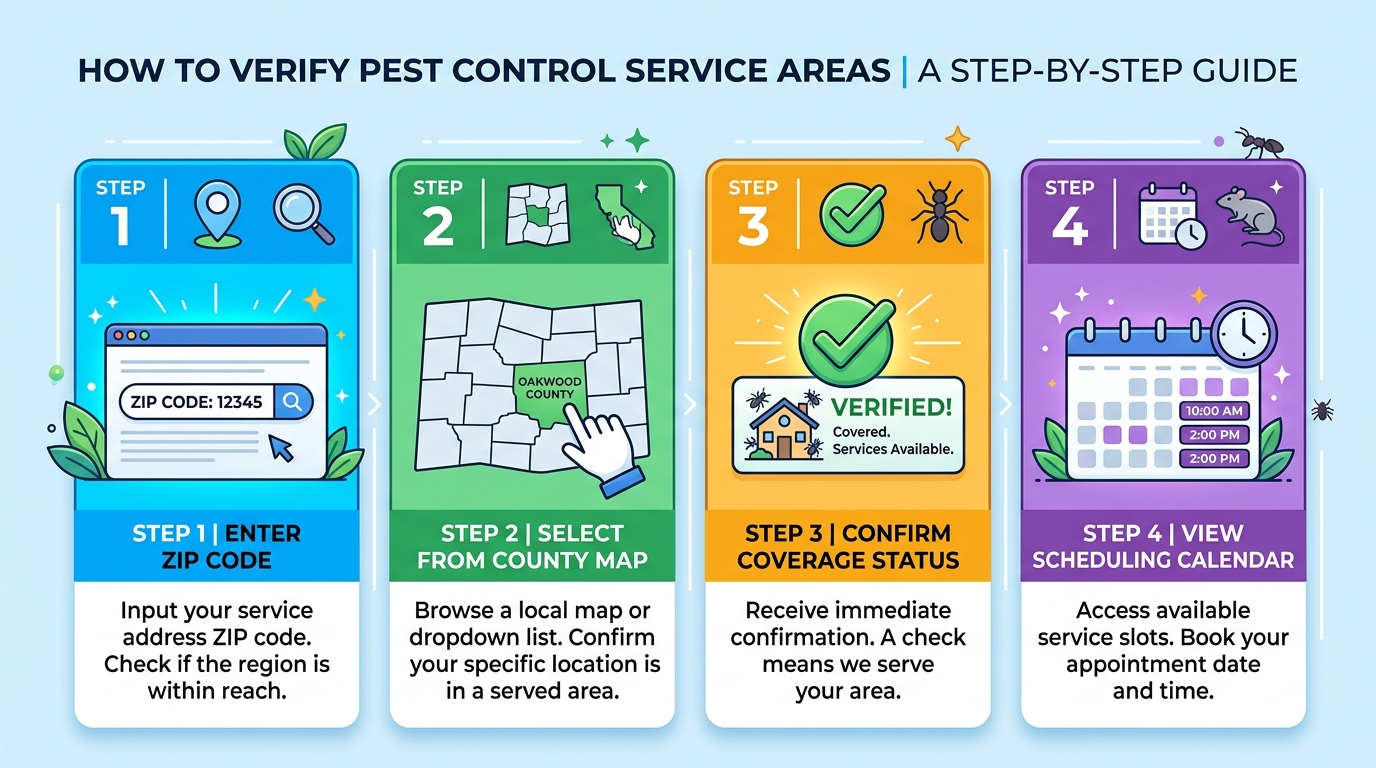
Step 1: Check the ZIP first
Use the company's ZIP-code checker or coverage map before anything else. Your five-digit ZIP is the most precise coverage test, because service areas often follow ZIP or county lines rather than city names. Our companion guide on service-area coverage by ZIP code explains how these boundaries are drawn.
Step 2: Match the pest and plan
Confirm the provider treats your target pest with the approach you want. For ants, ask whether they use non-repellent baits and perimeter treatments keyed to the ant species. Correct species identification matters: baits that work on odorous house ants can fail on carpenter ants, which nest in wood and need different handling. A provider that asks about trails, moisture, and nest location is thinking about ant biology, not just spraying.
Step 3: Get the estimate and appointment together
Once coverage and pest fit check out, request an estimate and an appointment window in the same contact. Ask for the plan type by name.
- One-time visit for a single, contained ant problem.
- Recurring service (monthly or quarterly) for ongoing prevention.
When DIY falls short
Store bait stations can clear a small trail. DIY fails when ants keep returning, when you see winged swarmers indoors, or when you find damaged or hollow-sounding wood, which points to carpenter ants. Repeated failure usually means the nest is hidden or misidentified. A licensed technician can locate satellite nests and select a registered product matched to the species. Learn what a first visit involves in our guide on what to expect when you report a pest problem.
What to ask when you request quotes
Good questions save you a second wasted call and sharpen your estimate. Ask these before you commit, in roughly this order.
Coverage and licensing
- "Do you service my ZIP code and county directly, or do you subcontract it?"
- "Which states are you licensed to operate in?"
- "Is the office that serves my address company-owned or a franchise?"
Ant-specific treatment
- "How do you identify the ant species before treating?"
- "Do you use baits, a perimeter barrier, or both, and why?"
- "How do you handle carpenter ants versus common trailing ants?"
Estimate and appointment
- "Is the estimate free, and is it firm or a range?"
- "What is the earliest appointment window for my area?"
- "Does the price cover a follow-up visit if ants return?"
Plan terms and guarantees
- "Is this a one-time visit or a recurring contract?"
- "What does the service guarantee include, and for how long?"
- "How do billing and cancellation work?"
Write the answers down. A provider that answers coverage and licensing clearly, and identifies your ant species intelligently, is worth your appointment. If you want a broader question checklist and how estimates are structured, our overview of pest-control service plans and pricing pairs well with these questions. Remember that you always place the call, so ask everything you need before booking.
Regional notes: how coverage varies across states
Service areas cluster by region for practical reasons: licensing, climate-driven pest pressure, and where a company's crews are based. Understanding these patterns helps you set realistic expectations, wherever you live.
Licensing shapes the map
Because each state licenses applicators separately, a firm expands one state at a time. A company strong in the Northeast may cover several nearby states yet have zero presence on the West Coast. That is exactly how a homeowner in one state ends up calling a company licensed only in another. The lesson holds nationwide: never assume multi-state coverage from a national-sounding name.
Climate shapes the pest and the plan
- Warm, humid regions often see year-round ant activity, so quarterly recurring plans are common.
- Colder regions see seasonal surges in spring and fall, so one-time or seasonal visits may fit better.
- Coastal areas combine ant pressure with mosquitoes and moisture pests, so bundled plans appear more often.
Where a company is based matters
Crews serve a radius from their office. Dense metro areas usually get tighter appointment windows. Rural addresses may face longer waits or fall just outside a service boundary. Ask directly whether your address sits inside the routine service radius or at its edge.
The practical takeaway is the same everywhere: verify your ZIP, confirm the licensed states, and match the plan to your region's ant season. If a provider cannot serve your area, HomePest Match focuses today on connecting homeowners in covered regions; you can explore our Florida pest-control guide and ant control resources for detailed, region-specific help.
Cost factors to expect (no fixed prices)
Prices vary by region and provider, so treat any number as a published range, not a promise. What matters more is understanding the factors that move your estimate up or down.
Factors that raise the price
- Infestation size and spread. Multiple ant trails, indoor and outdoor activity, or several nests take more time and product.
- Species difficulty. Carpenter ants and other wood-nesting species need more labor than surface-trailing ants.
- Property size and access. Larger homes, longer perimeters, and hard-to-reach crawl spaces increase labor.
- Structural conditions. Moisture problems, cracks, and dense landscaping create harborage that raises the workload.
Factors that lower the effective cost
- Recurring plans spread cost across visits and often include free re-treatment between scheduled stops.
- Early treatment of a small, contained trail is cheaper than a widespread problem.
- Bundling ants with other general pests can reduce the per-pest price.
How to read an estimate
Ask whether the quote is a firm figure or a range, whether it covers a follow-up, and what triggers an added charge. Compare the initial service fee against the recurring fee separately, since the first visit is usually more intensive. For a deeper walk-through of how quotes are built and what shapes the number, see our guide on pest-control service plans and pricing. Confirm coverage first, then let these factors guide your questions so the estimate you receive reflects your actual home.
Common questions
How do I know if a pest control company covers my area?
Check the company's service-area page, coverage map, or ZIP-code checker before calling. Many phone menus also ask you to enter your five-digit ZIP up front to screen coverage. If your ZIP is rejected or you are routed out of state, the company likely does not serve you.
Why did a national-sounding company tell me they don't service my state?
Pest control is licensed state by state, so many brands operate in only a few states or regions. A broad website or national-sounding name does not guarantee coverage where you live. Always confirm the licensed states and your ZIP before booking.
Can I get an ant control estimate over the phone?
Often yes, once the company confirms it services your ZIP and treats your ant species. Ask whether the estimate is firm or a range and whether it includes a follow-up visit. You always initiate the call, so gather these details before you schedule.
What should I do if the company I called doesn't serve my region?
Stop and verify coverage for the next provider by ZIP before you call again. Look for a coverage map or ZIP checker on each company's own site. This one habit prevents most wasted calls.
Does HomePest Match provide pest control service?
No. HomePest Match is an independent information and provider-matching site, not a pest-control company. We help you understand coverage, plans, and questions to ask, and you always start contact with providers yourself.
Related: service-area coverage by ZIP code · what to expect when you report a pest problem · pest-control service plans and pricing · ant control resources · Florida pest-control guide