Renter Qualification for Roach Pest Control: Tenant Criteria Explained
If you rent and see roaches, you can often request service — but qualification depends on who authorizes and pays for it. Most providers need either the property owner's approval or proof you control the unit and its treatment. This guide shows exactly what renters must confirm before a company will schedule.
Calls may be recorded for quality and matching purposes.
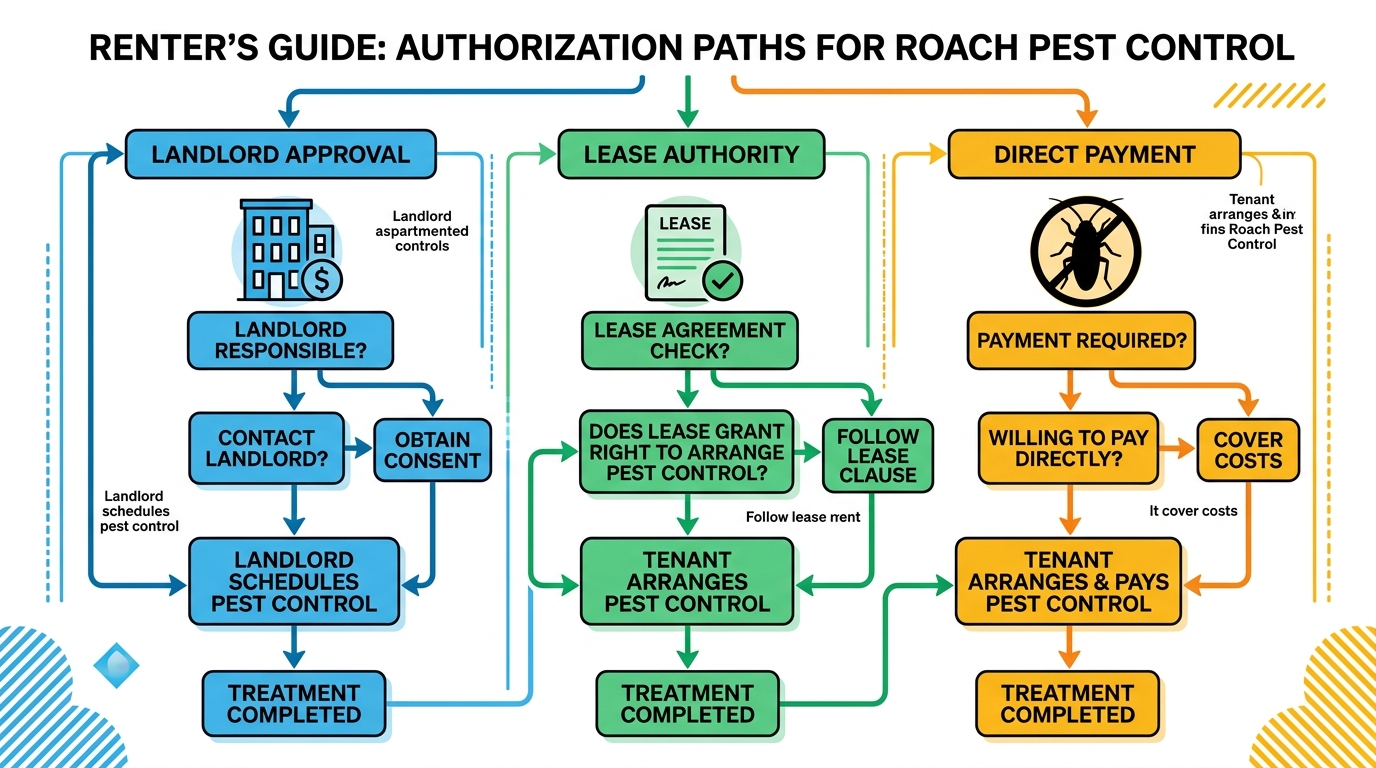
Who this guide is for and what you must decide
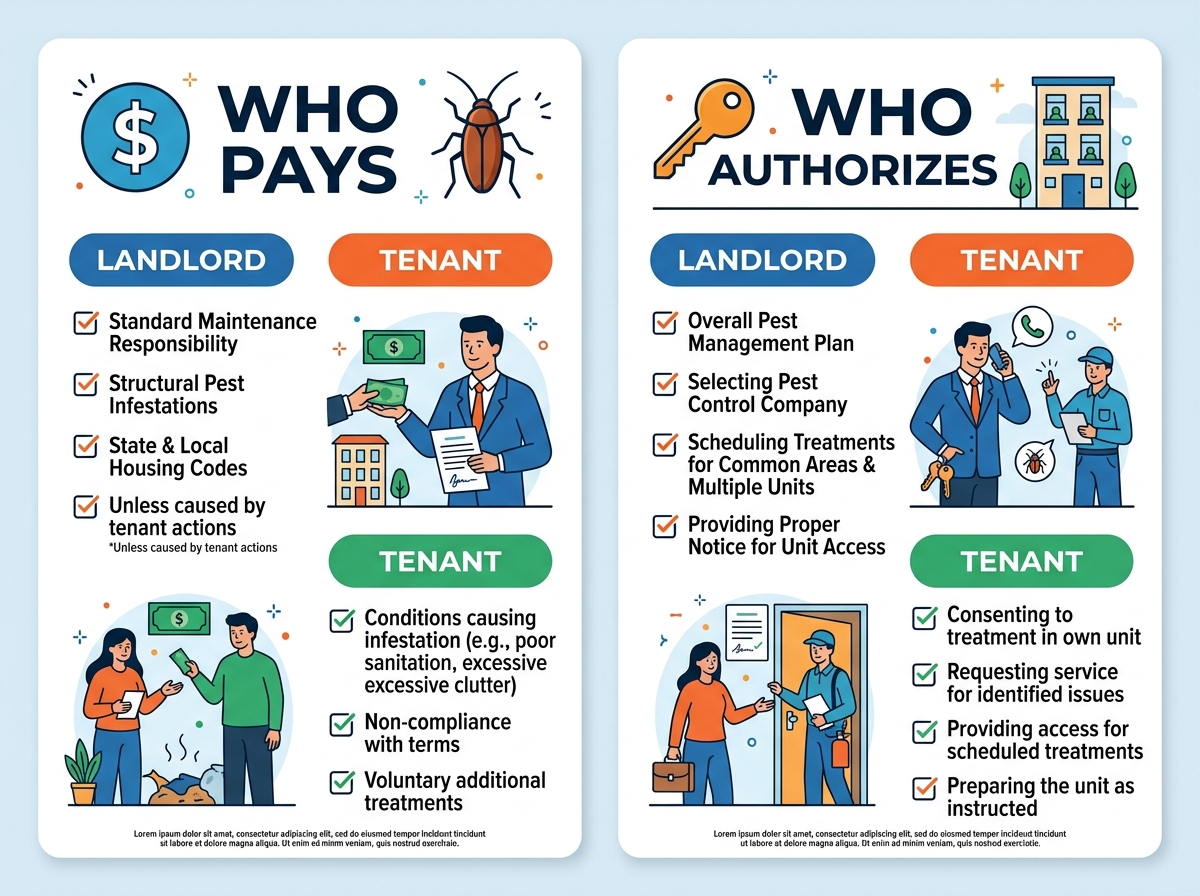
This page is for renters who see cockroaches in a house or apartment and want to schedule professional pest control. You share walls, a lease, and often a shared cause of the problem. That changes how service works compared to an owner-occupied home.
Your core decision is simple to state but easy to get wrong: are you the person who can authorize and pay for treatment? Pest control is a service performed on someone else's property. Providers must know who holds that authority before a technician sets foot inside.
Three situations renters fall into
- The landlord arranges service. Many leases make the owner responsible for structural pest issues. Here you report the problem and the owner schedules and pays.
- You arrange service yourself. Some leases let tenants handle minor pests, or you simply want faster action. You can hire a provider directly if you control the unit.
- Shared multi-unit building. German cockroaches travel between apartments. Treating one unit rarely fixes a building-wide source, so many providers prefer coordinating with management.
HomePest Match is an independent matching service, not a pest-control company. We help you understand qualification rules and connect with providers. When you call a matched provider, you initiate the contact, and that call may be recorded. Knowing your role first prevents a wasted appointment and an awkward conversation at the door.
What renters misunderstand about qualifying
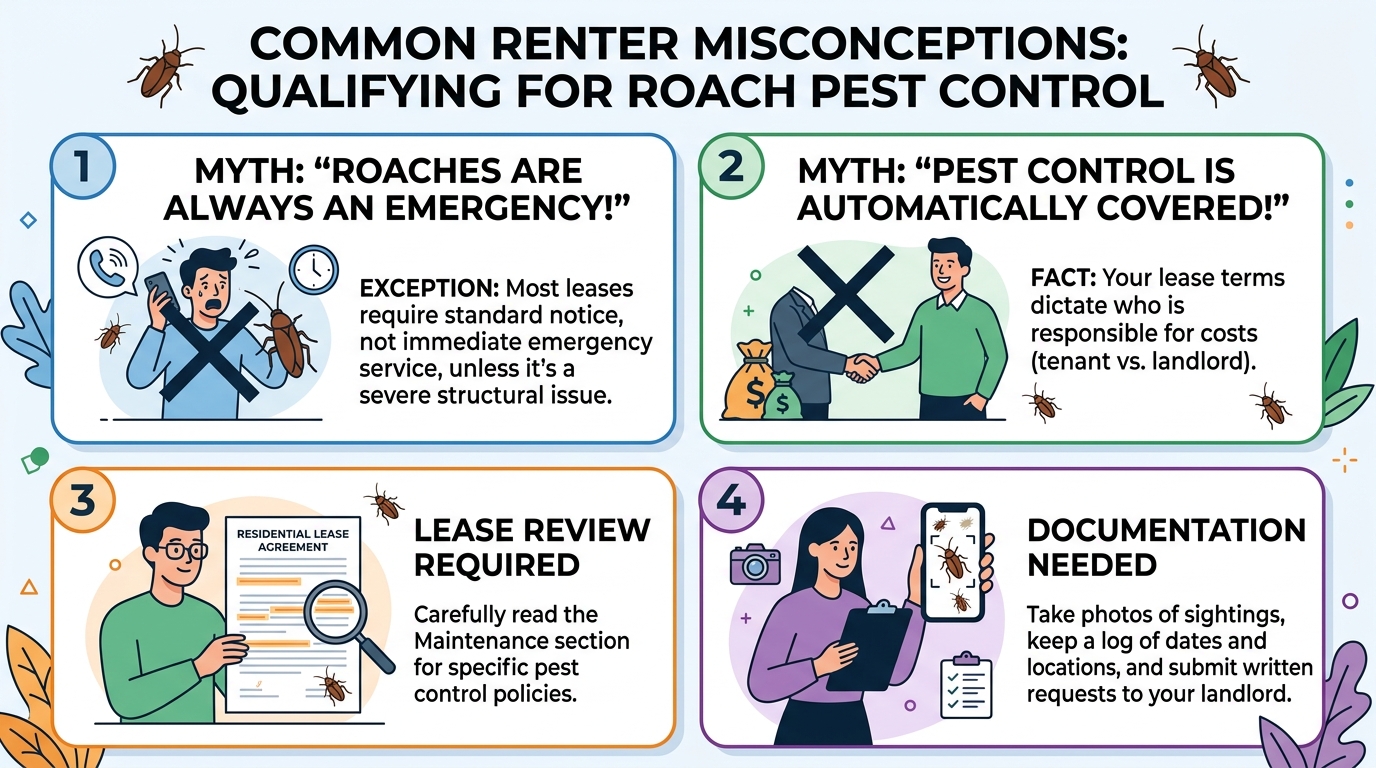
The biggest misunderstanding is this: renters assume that living in the home is enough to qualify for service. It usually is not. Qualification hinges on authorization and payment, not occupancy alone.
A pest-control provider needs a legally responsible party to approve the treatment. That is the person who can consent to chemicals applied indoors and who accepts the bill. If your lease makes the owner responsible for pest control, the provider may require the owner's sign-off before scheduling. This protects both you and the company.
Why the payment question comes first
When you request a quote, expect the provider to ask who is paying. If you say the landlord, most companies will ask for the landlord's contact so they can confirm authorization. If you say you are paying yourself, you generally qualify to schedule, as long as you occupy and control the unit.
Renters also confuse a one-time treatment with a recurring plan. A single roach treatment is easier to authorize as a tenant. Ongoing quarterly or monthly service ties the property to a contract, and owners often want a say in that.
The lease is your qualifying document
- Read your lease's pest or habitability clause. It names who handles infestations.
- Many leases follow the local warranty of habitability, which generally requires landlords to keep units pest-free.
- If the lease is silent, you may still hire service yourself, but confirm you will not violate any clause about property changes.
In short: you qualify when you can prove you occupy the unit and either pay for treatment or hold the owner's approval. Clarify that before you schedule, and the appointment goes smoothly.
Signs you have a roach problem worth reporting
Before you request service, describe the problem accurately. Providers qualify and price the job partly by what you report. Vague reports lead to vague quotes.
What roaches leave behind
- Live sightings at night. German cockroaches — small, tan, with two dark stripes behind the head — scatter when you flip on a kitchen light. This species drives most apartment infestations.
- Fecal specks. Look for pepper-like flecks or dark smear marks along cabinet edges, hinges, and drawer runners.
- Egg cases (oothecae). These tan, purse-shaped capsules hold 30 to 40 eggs. German roaches often glue them inside cabinet hinges and tight cracks.
- A musty, oily odor. Heavy infestations produce a distinct smell from scent glands and droppings.
- Shed skins. Nymphs molt several times, leaving pale cast skins near harborage.
Where they hide
Roaches seek warmth, moisture, and food. Check under the sink, behind the refrigerator, around the dishwasher, and inside the motor housing of appliances. In apartments, they enter through shared plumbing chases and wall voids, which is why a neighbor's problem becomes yours.
The U.S. Centers for Disease Control and Prevention notes that cockroach allergens can trigger asthma symptoms, especially in children. That health angle strengthens your case when reporting the issue to a landlord. Document what you see with dated photos of live roaches, droppings, and egg cases. Clear evidence speeds authorization and helps a provider quote the right treatment the first time.
What actually works against roaches — and when DIY fails
German cockroaches are the hardest common pest to control because they breed fast and hide deep. Understanding the methods helps you judge a provider's plan and know when store products stop working.
The professional toolkit
- Gel baits. A technician places small dots of insecticidal gel where roaches travel — hinges, cracks, and appliance seams. Roaches eat it, return to harborage, and the active ingredient spreads through the population by contact and feeding.
- Insect growth regulators (IGRs). These compounds mimic or block insect hormones so nymphs never reach breeding maturity. Hydroprene, sold under trade names like Gentrol, is one example. IGRs do not kill instantly; they collapse the next generation.
- Integrated Pest Management (IPM). This university-backed approach combines baiting, sanitation, and exclusion instead of blanket spraying. Extension services from universities publish detailed IPM fact sheets for cockroaches.
The Environmental Protection Agency registers the pesticide products a licensed technician uses, and you can verify a product in the EPA's public pesticide database. Registration confirms the product was reviewed for its labeled use.
Why DIY often fails
Over-the-counter sprays scatter roaches without reaching the harborage, a behavior called bait aversion or dispersal. Foggers push insects deeper into wall voids. Cheap baits can trigger aversion if the population has grown resistant to a common sugar. Renters also cannot always reach shared voids where the true colony lives.
DIY makes sense for a light, early sighting. Once you see egg cases, daytime roaches, or roaches in multiple rooms, call a provider. For more on this pest, see our cockroach control guide.
What to ask when you request quotes as a renter
Because you rent, your quote conversation has extra steps. Ask these questions before you commit, and describe your situation clearly so the provider can confirm you qualify.
Qualification questions
- Do you treat rented units, and do you need landlord authorization? Get the answer before scheduling to avoid a canceled visit.
- Can I book a one-time treatment, or only a recurring plan? One-time service is easier to authorize as a tenant.
- Do you coordinate with property management for multi-unit buildings? This matters when neighbors share the source.
Service and pricing questions
- Is this a general-pest treatment or a roach-specific protocol? German roaches need targeted baiting and IGRs, not a perimeter spray.
- How many follow-up visits are included? Roach control usually needs two to three visits over several weeks to break the breeding cycle.
- What preparation do I need to do? Expect to empty cabinets, clean grease, and clear under sinks.
- Is there a service guarantee if roaches return? Ask what triggers a free re-treatment and how long it lasts.
When you call a matched provider, you make the first move — providers do not cold-call you back, and any call may be recorded for quality. Have your address, ZIP code, lease responsibility, and photos ready. For a walk-through of scheduling, read what to expect when you report a pest problem. To describe the issue well, see how to report a pest problem.
Multi-unit and rural coverage notes for renters
Your building type and location shape both qualification and coverage. Two situations trip renters up most often.
Apartments and shared buildings
In a multi-unit building, German cockroaches move through shared plumbing and wall voids. A provider may treat your unit, but the colony can re-enter from an untreated neighbor. Because of this, many companies prefer that management authorize a coordinated, building-wide plan. If you can only treat your own unit, ask the provider how they will seal entry points and set expectations for reinfestation.
What if no provider covers your address?
Rural and outlying addresses sometimes fall outside a company's service map. Coverage is set by ZIP code and drive time, not by whether the provider technically operates in your state. If your first choice cannot reach you, you have options:
- Ask which nearby ZIP codes the provider does serve, and whether yours is a scheduled route on certain days.
- Request a match with a second provider whose territory reaches farther out.
- Confirm a franchise's local branch handles your area, since a national brand name does not guarantee a technician near you.
To verify coverage before you invest time, check our guide on pest control service area coverage by ZIP code. Enter your ZIP first, confirm the pest fit, then request an estimate — a simple three-step order that saves calls. Licensing also stays local: most states require pest-control operators to hold a license through a state structural pest-control board or department of agriculture. You can confirm a company's license through that state agency before booking.
Cost factors that shape a renter's roach quote
We do not publish fixed prices, because your quote depends on real variables a technician assesses. Knowing these factors helps you read an estimate and compare providers fairly.
What raises or lowers the price
- Infestation severity. A few roaches under one sink costs less than a kitchen-wide colony with egg cases in every hinge.
- Unit size and layout. More square footage and more cabinets mean more bait placements and labor.
- Number of follow-up visits. Effective German-roach control needs repeat visits; a single treatment rarely ends it. More visits raise the total but improve results.
- One-time versus recurring plan. A single targeted treatment carries a flat charge. A quarterly or monthly plan spreads cost and adds ongoing protection, but ties you to a schedule.
- Building type. Multi-unit coordination and shared-void treatment can add scope compared with a standalone rental house.
- Preparation done. Cleaning grease and clearing cabinets before the visit improves bait uptake and can reduce return trips.
Who pays affects your out-of-pocket
If your lease makes the owner responsible, you may pay nothing directly — the landlord authorizes and settles the bill. If you hire service yourself, you pay the provider and should keep receipts, especially if you plan to request reimbursement under a habitability clause.
For a deeper look at plan structures and how recurring service is billed, see our pest control service plans and pricing guide. Ask each provider to itemize the treatment, the number of included visits, and any guarantee, so you compare like with like rather than a single headline number.
Common questions
Do I qualify for pest control service if I rent?
Usually yes, if you occupy the unit and can either pay for treatment or provide the property owner's authorization. Providers need a responsible party to approve indoor chemical application. Check your lease to see who handles pest issues before you schedule.
Can I schedule roach treatment without telling my landlord?
For a one-time treatment you arrange and pay for, often yes, as long as your lease does not forbid it. Recurring contracts usually need the owner's approval since they bind the property. For multi-unit buildings, coordinating with management gets better results.
What if my landlord is responsible but won't act?
Document the roaches with dated photos and written reports. Many local habitability laws require landlords to keep rentals pest-free. If they still refuse, you may hire service and keep receipts, or contact your local housing or code-enforcement office.
What if no provider covers my rural address?
Coverage follows ZIP code and drive time. Ask the provider which nearby ZIP codes they serve or whether your area is a scheduled route. If they can't reach you, request a match with a second provider whose territory extends farther out.
How do I verify a franchise's local coverage and license?
A national brand name does not guarantee a nearby technician. Confirm the local branch serves your ZIP code before booking. Verify the operator's license through your state's structural pest-control board or department of agriculture, and check that products are EPA-registered.
Why won't one treatment stop the roaches?
German cockroaches breed fast, and egg cases survive many sprays. Effective control needs baiting plus insect growth regulators across two to three visits over several weeks. Ask any provider how many follow-ups their quote includes.
Related: cockroach control guide · how to report a pest problem · pest control service area coverage by ZIP code · what to expect when you report a pest problem · pest control service plans and pricing guide